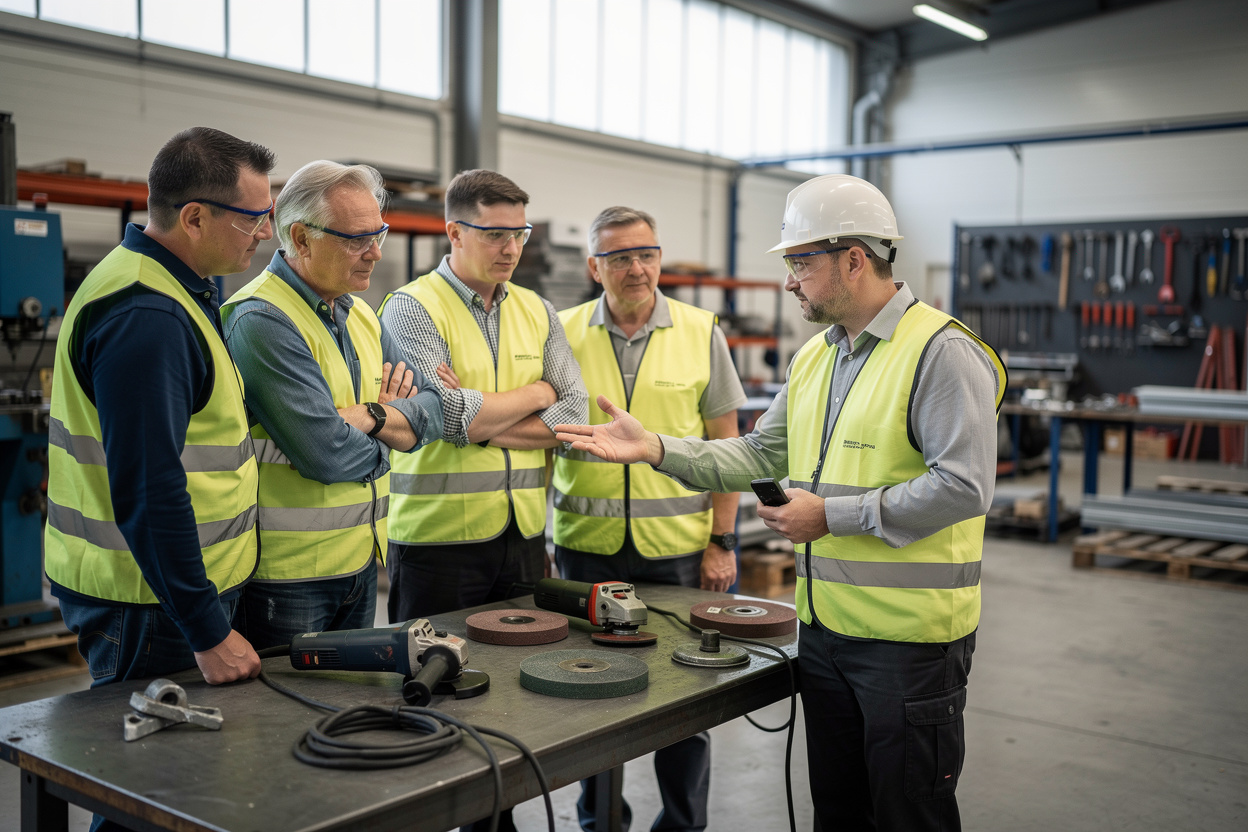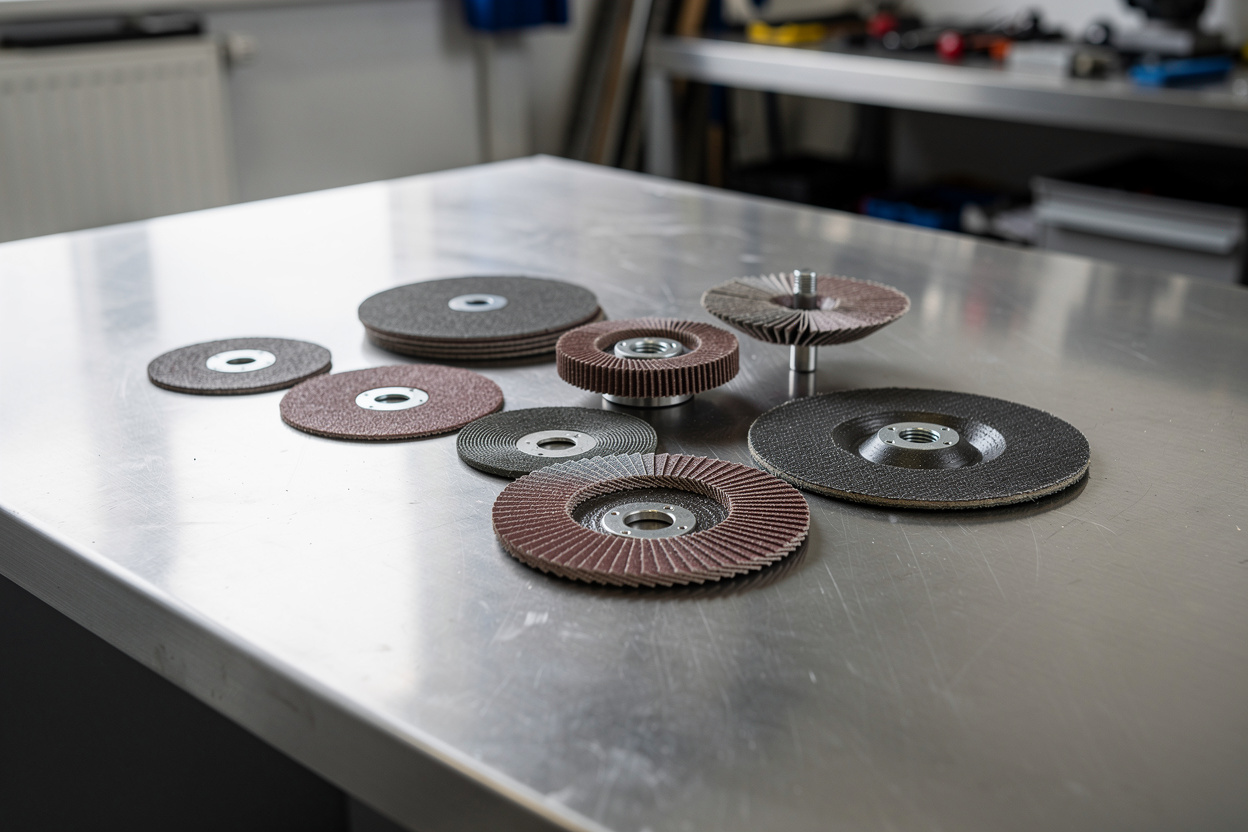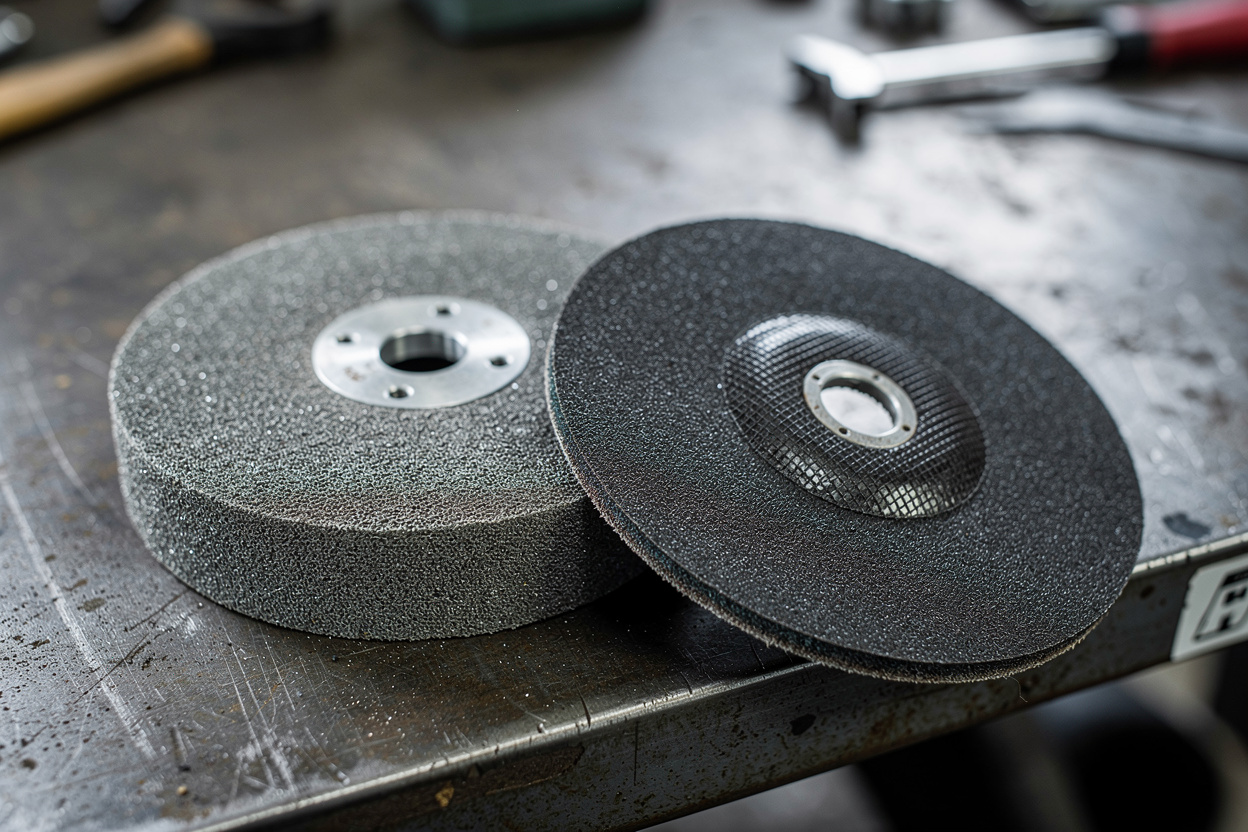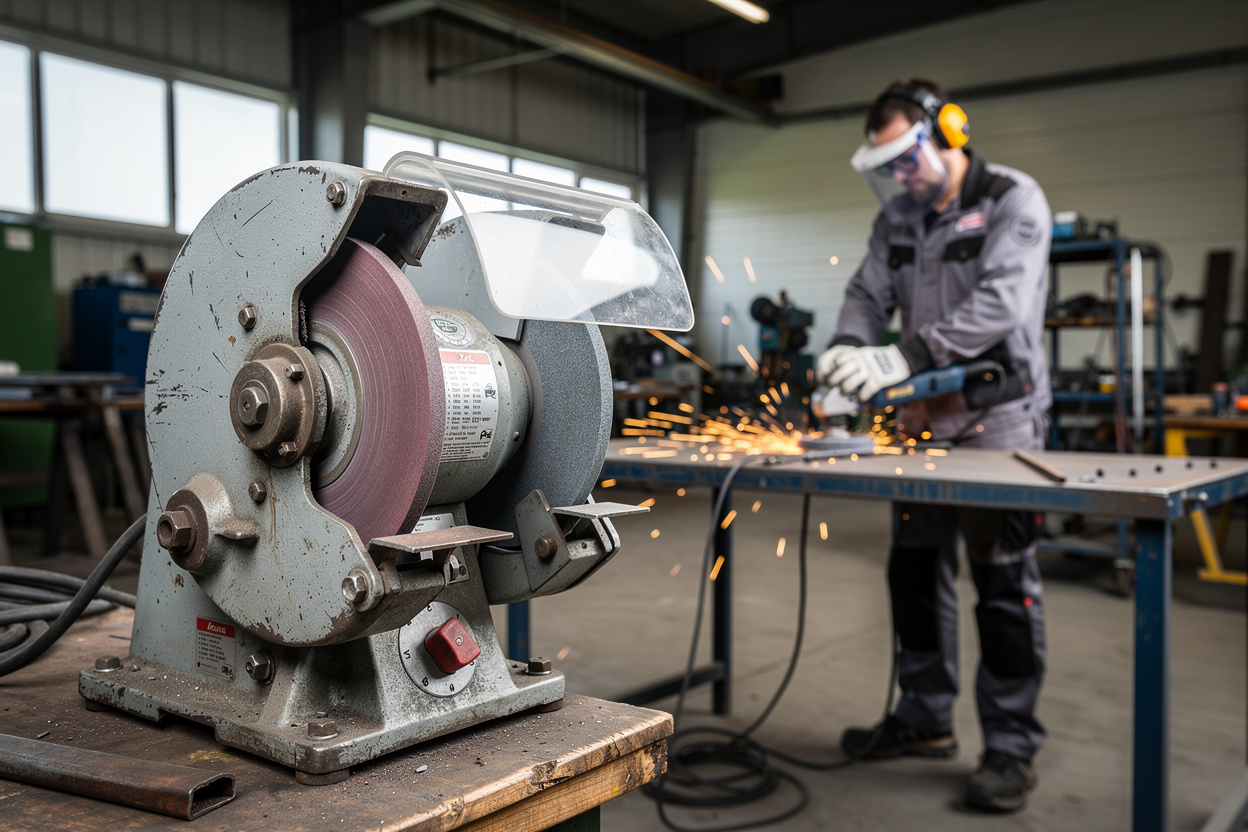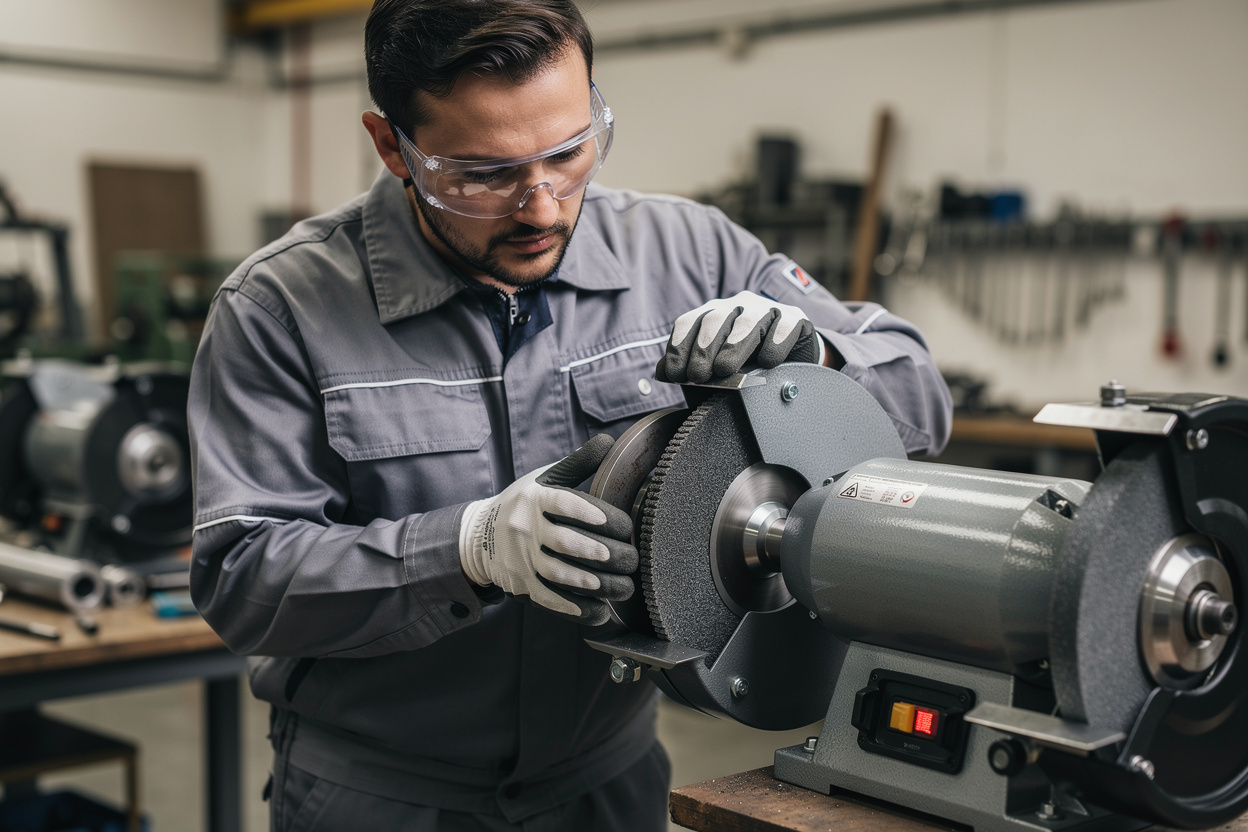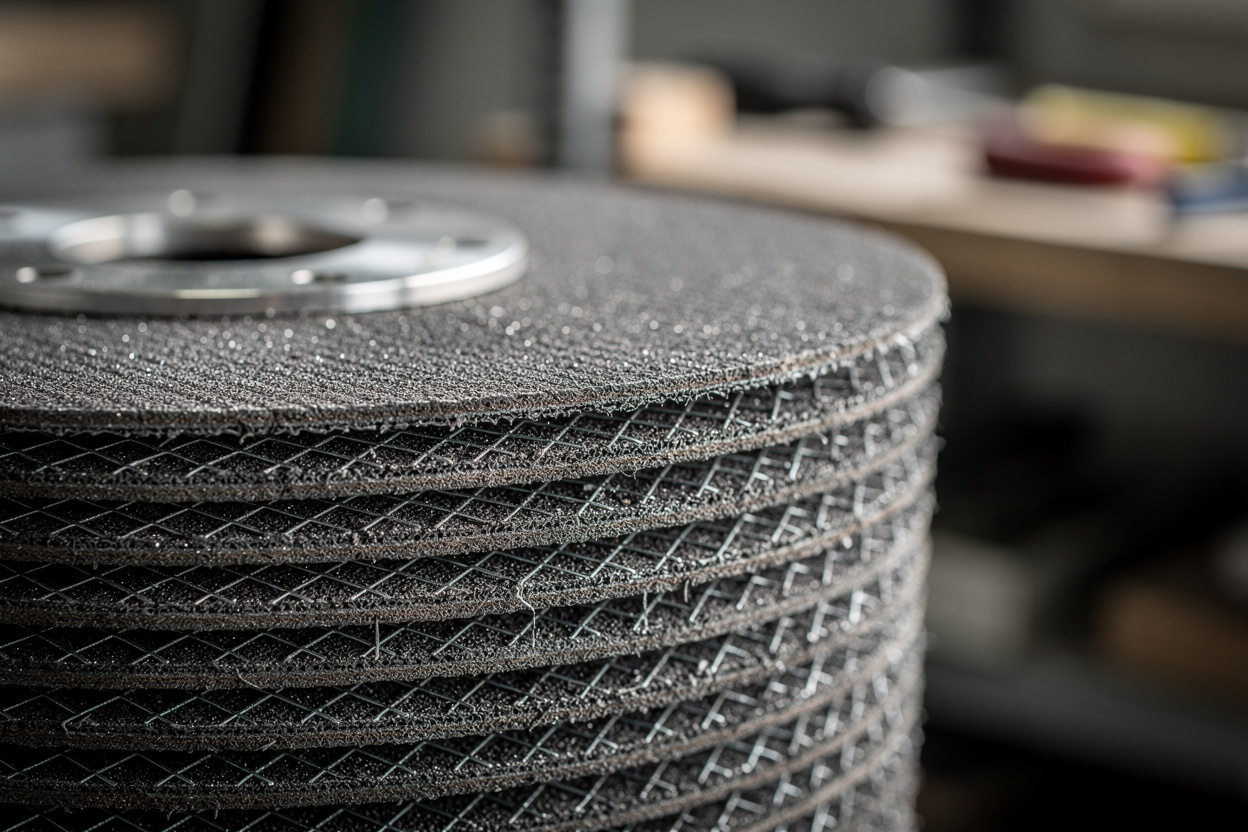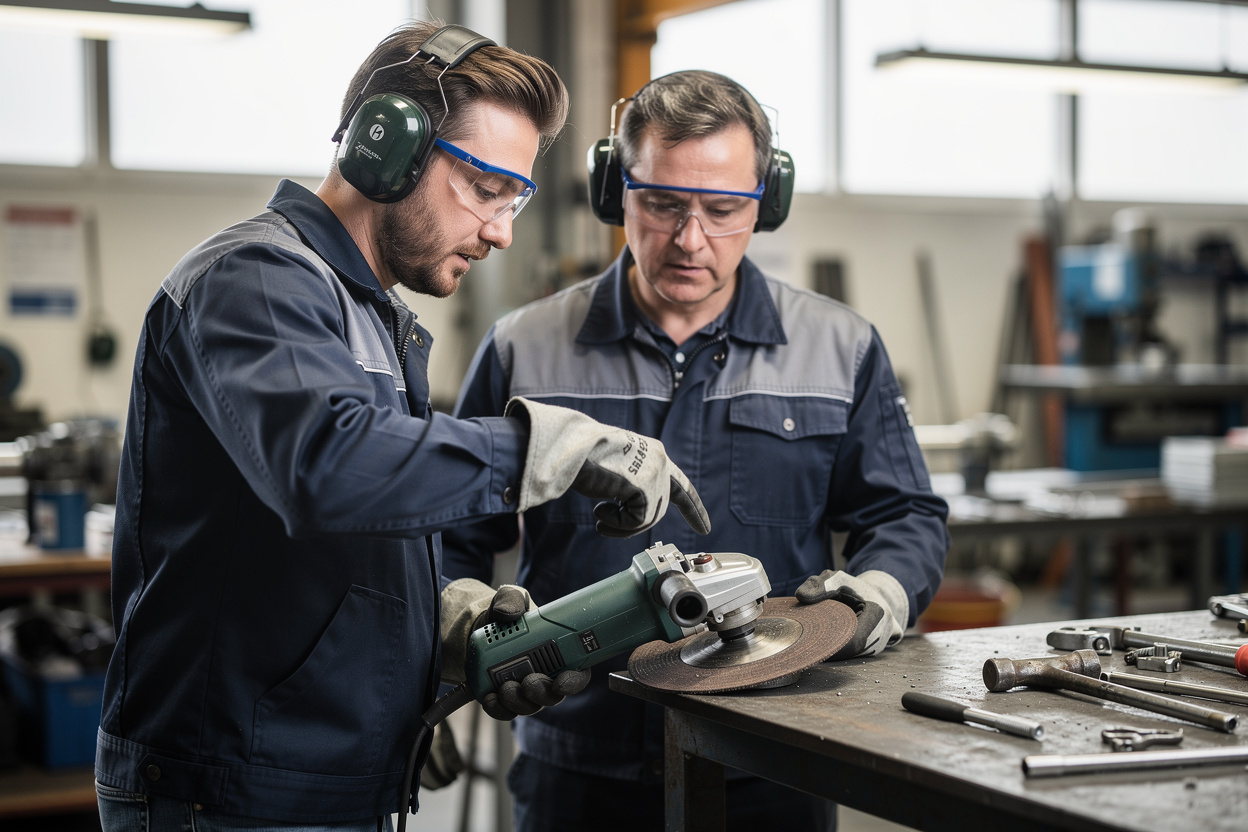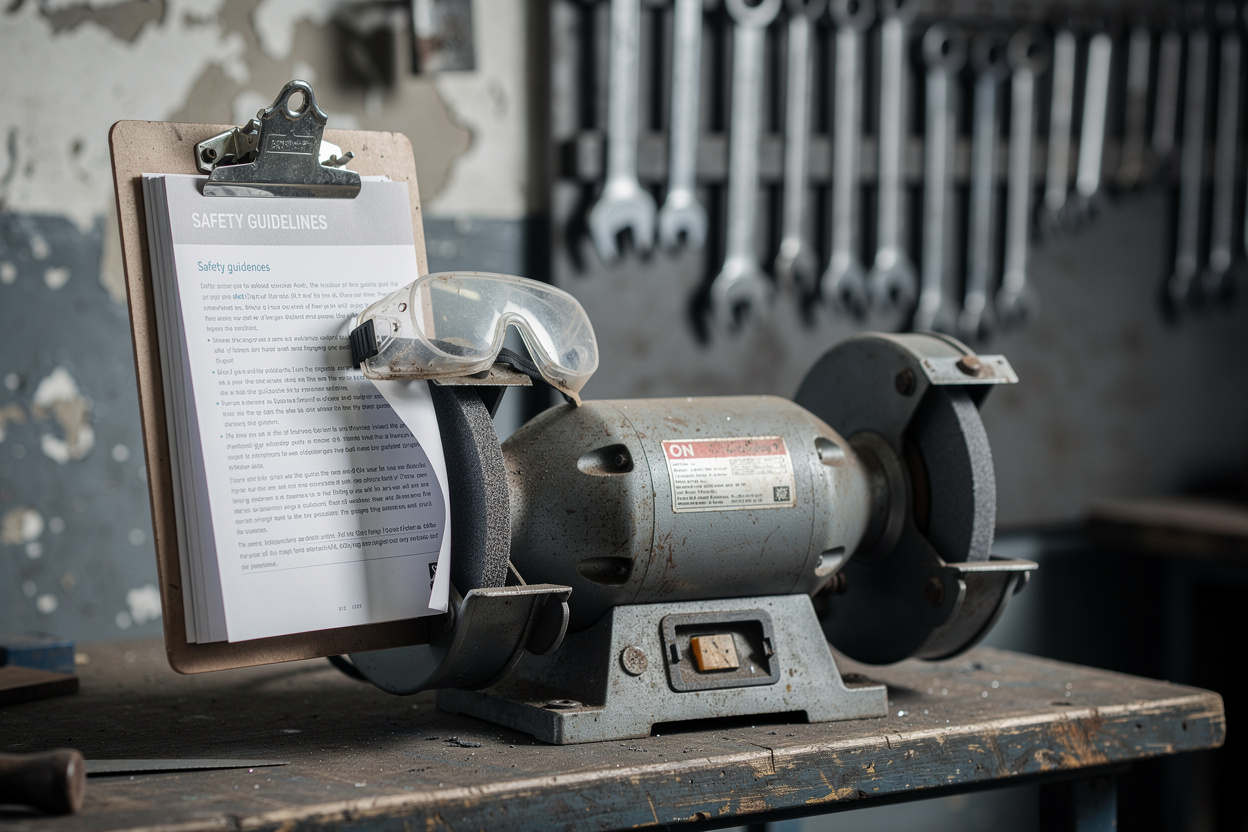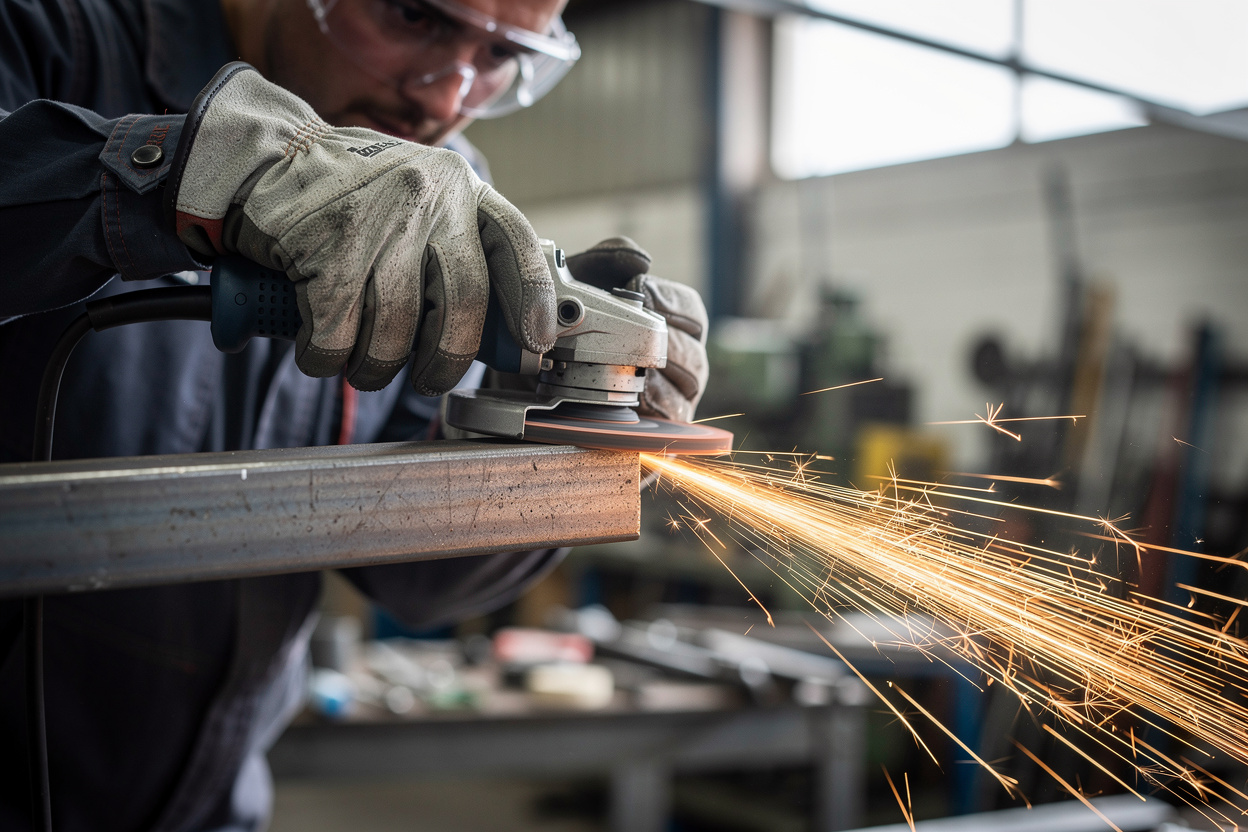
Abrasive wheels are used in almost every industry and in a huge range of workplaces. They come in many sizes and shapes and have a wide variety of uses, from sharpening a chisel to cutting through steel plate. They fit a variety of machines, from small hand-held angle grinders to very large industrial grinding and cutting-off machines.
The majority of accidents with abrasive wheels happen because of poor planning, incorrect selection of the wheel and unsafe use. Almost all of them are preventable.
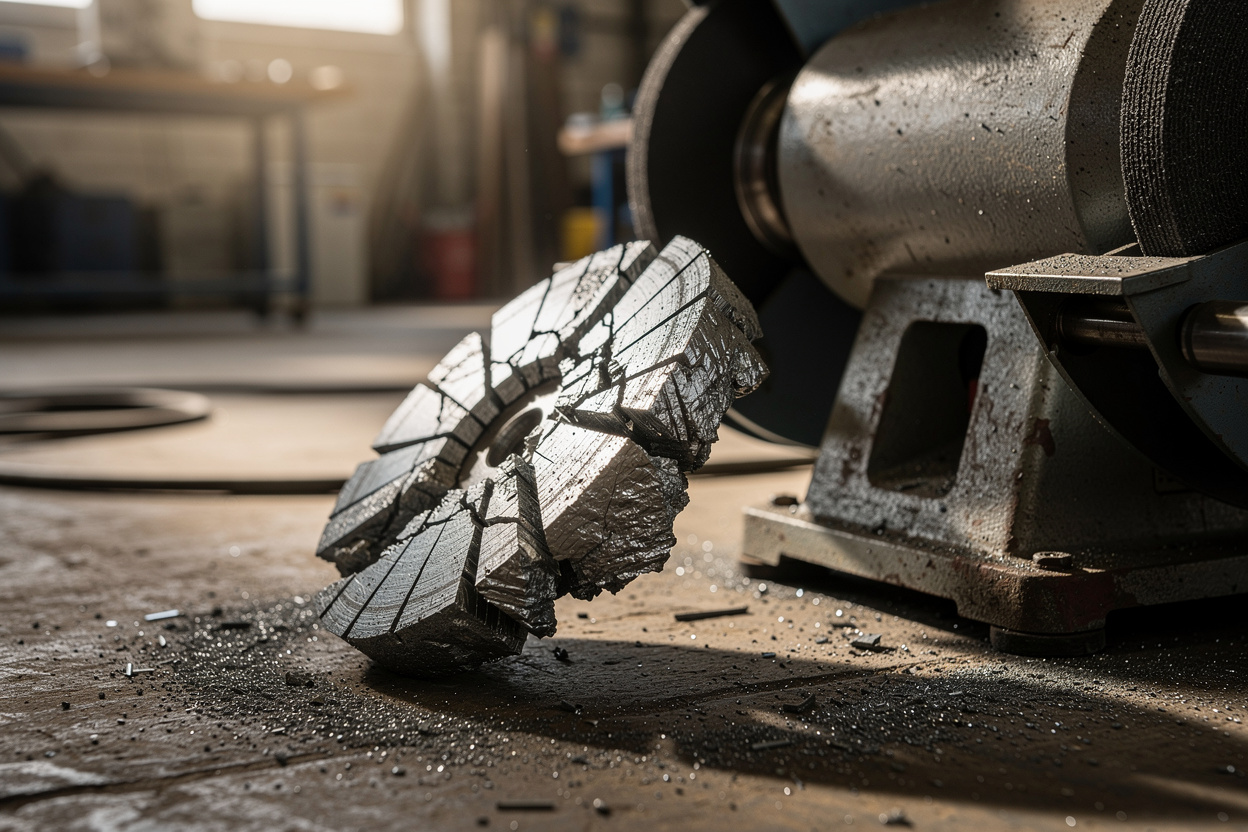
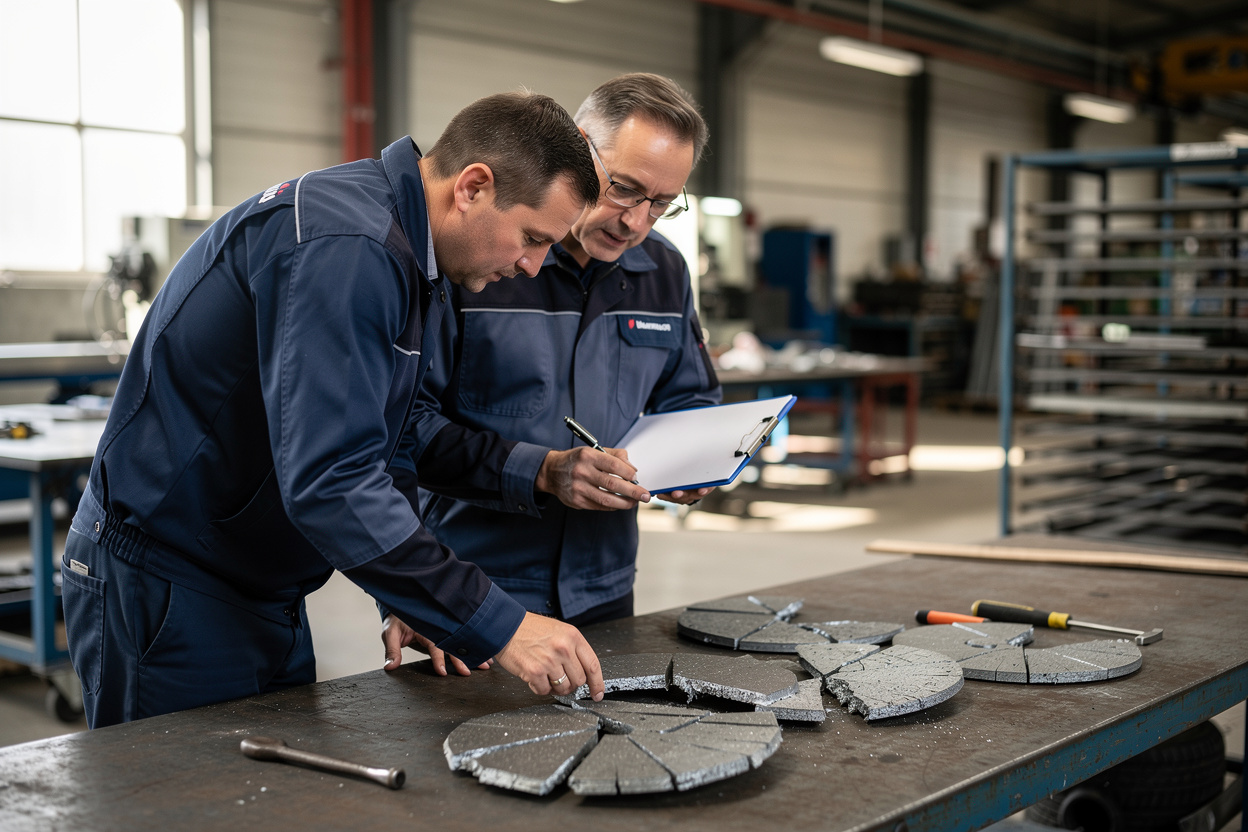
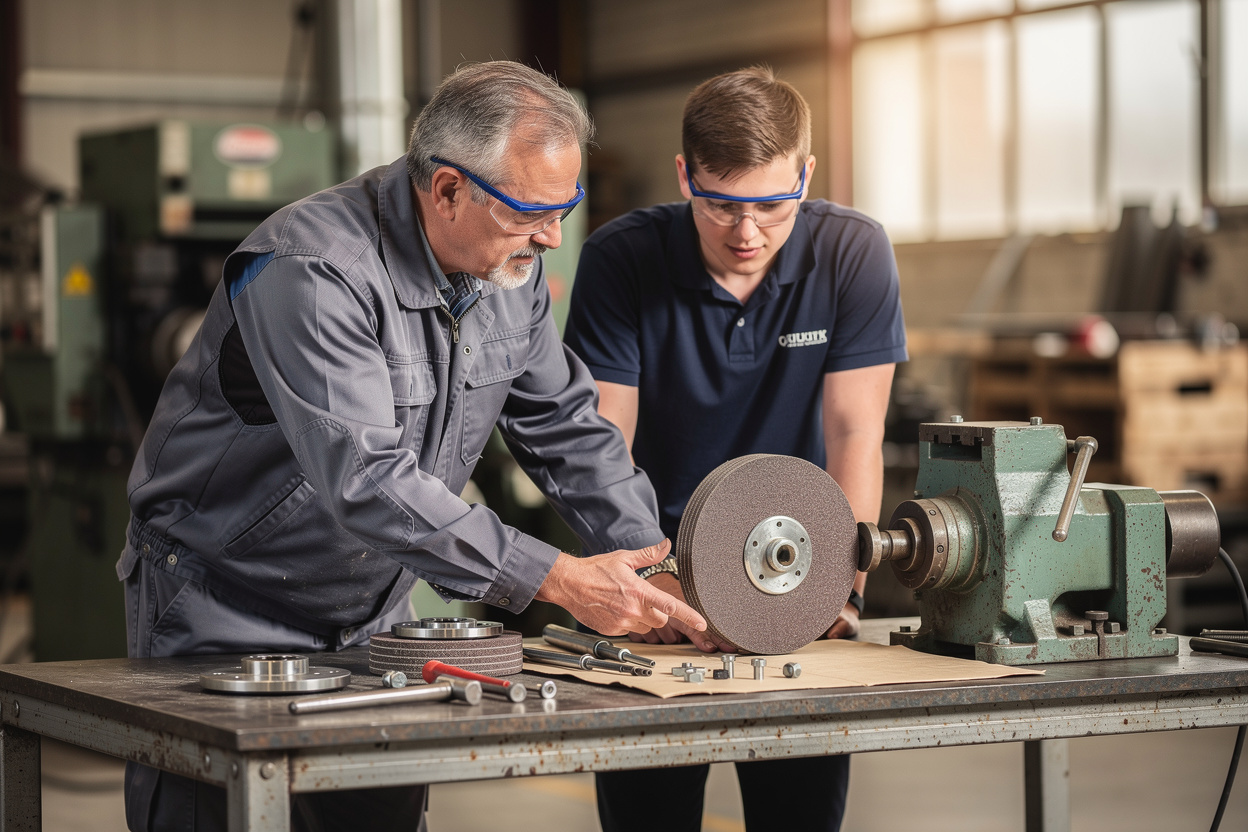
The main safety risk is a wheel breaking or bursting at high speed, usually because it was incorrectly or poorly mounted, run too fast, or damaged before use. Fragments leave a bursting wheel at the speed of a bullet from an air rifle, and the result can be serious injury or death.
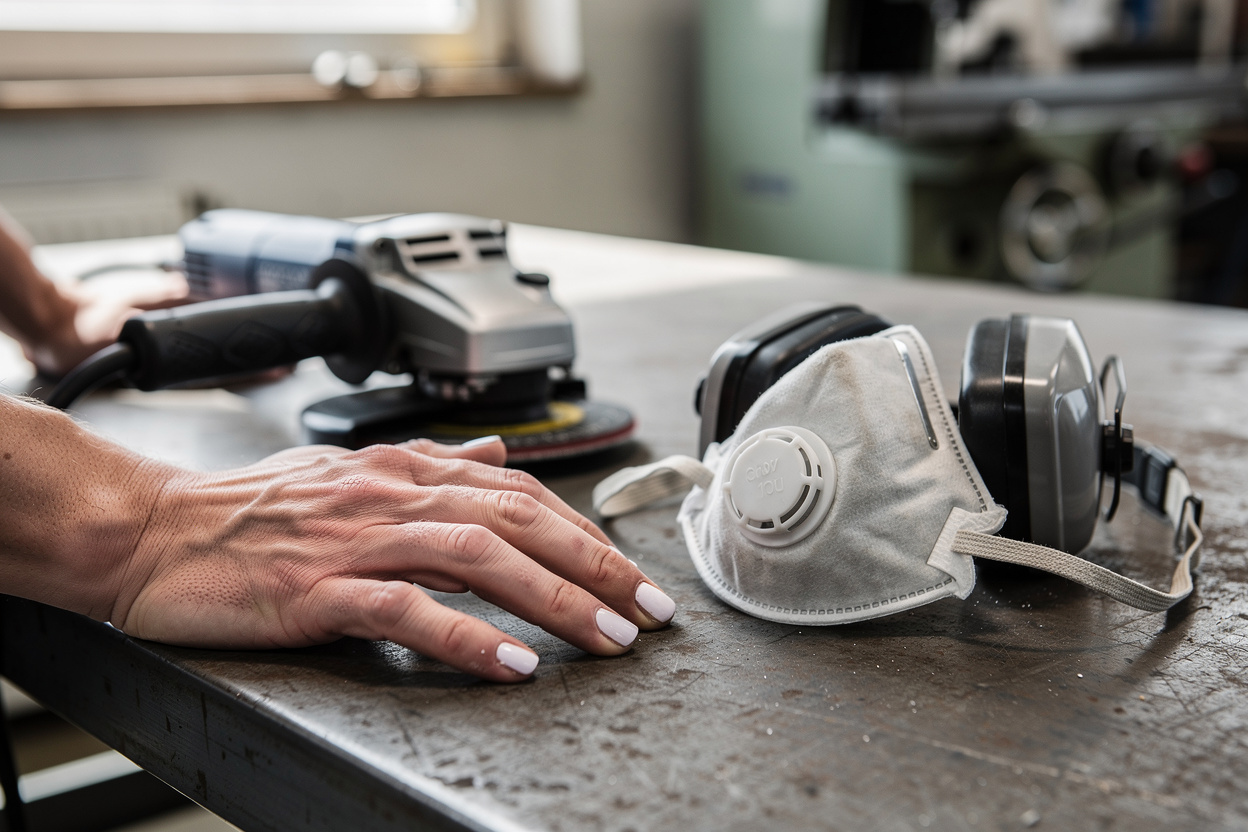
There are also health risks that build up over time: unsafe manual handling of heavy wheels and machines, harmful metalworking fluids, breathing in dust and fumes, noise, and Hand-Arm Vibration Syndrome (HAVS) from hand-held machines.
This course explains why everyone who works with abrasive wheels must understand these risks, and the controls that are needed to use abrasive wheels safely.