← Exit
Module 1 · Introduction and Legal Requirements0% complete · 14 slides left
Working at Height Course
Module 1
This course contains audio. Use headphones in public places.
Introduction
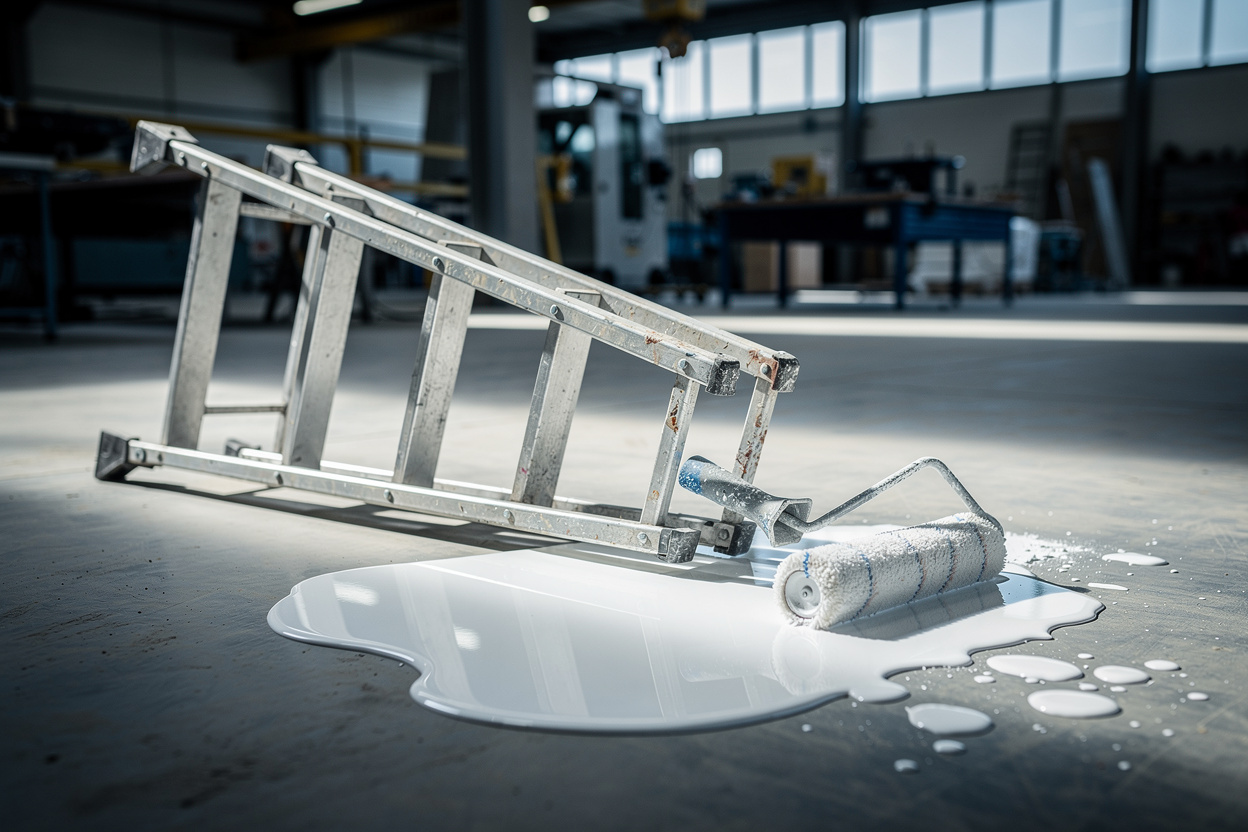
Falls: the No. 1 cause of workplace deathsPeople AND objects fall
Introduction

Falls from height are one of the most common causes of serious injury and death at work. They involve people falling from one level to another, and objects falling onto the people below. The victims are not only the workers on the roof, the ladder or the platform, but also colleagues, contractors and members of the public underneath.

In Great Britain, work at height is governed by the Work at Height Regulations 2005. The regulations apply to every task carried out at height, whether in a factory, a warehouse, on a construction site, in a shop or in an office.

Employers and employees both need to understand the measures that reduce the risk of a fall and limit its consequences. This course explains the hazards of working at height, the law that applies, the equipment most commonly used, and the practical steps that prevent falls, so that work at height can be planned and carried out safely.

Course Aims
Course Aims

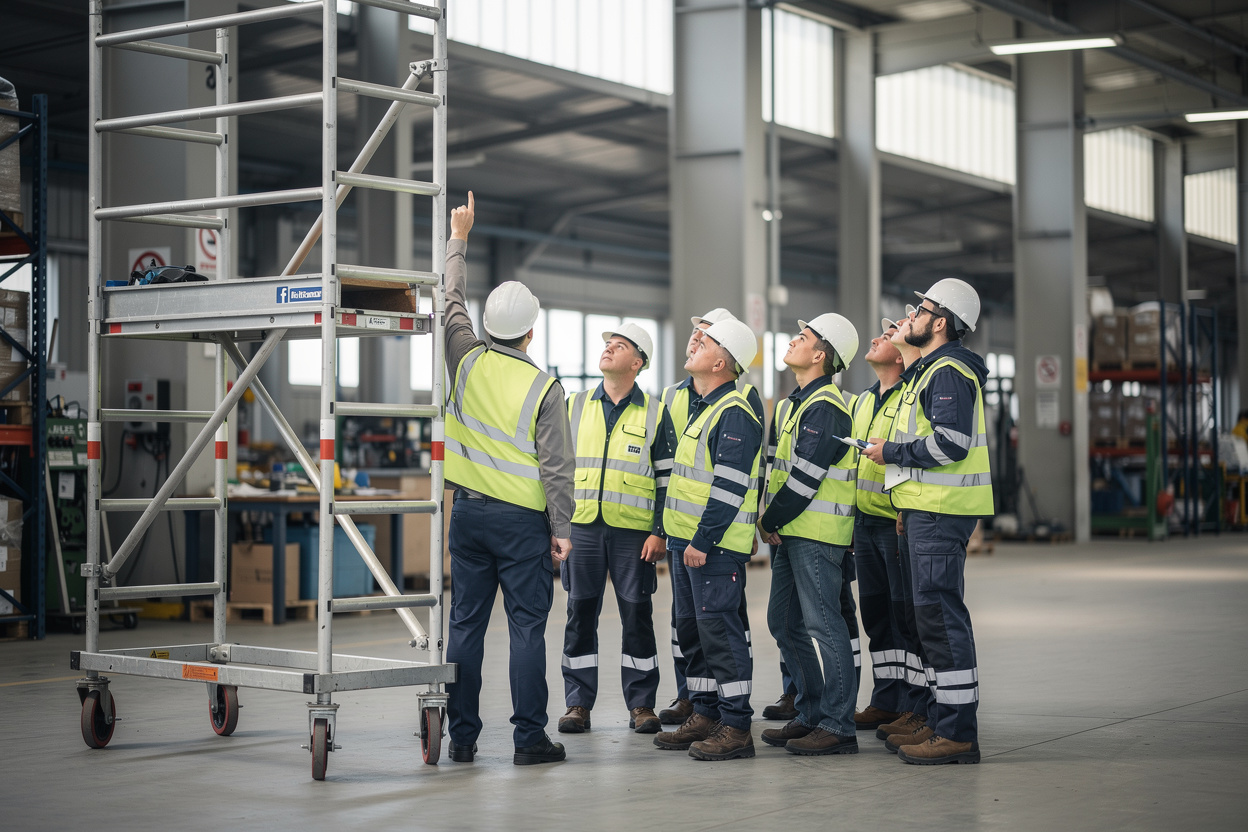
By the end of this course you will be able to:

  • Understand the key requirements of the Work at Height Regulations 2005.
  • Give examples of everyday tasks that involve work at height and recognise the dangers and risks that go with them.
  • Recognise the factors that cause people and objects to fall from height.
  • Explain the hierarchy of control measures used to avoid, prevent and reduce the consequences of falls.
  • Understand how to select, inspect and use access and work at height equipment correctly, and how to reach a place of work at height safely.
What Counts as Work at Height?
No minimum heightThe back of a lorry is work at height
What Counts as Work at Height?

Work at height means work in any place where, if there were no precautions, a person could fall a distance liable to cause personal injury. There is no minimum height. It includes:

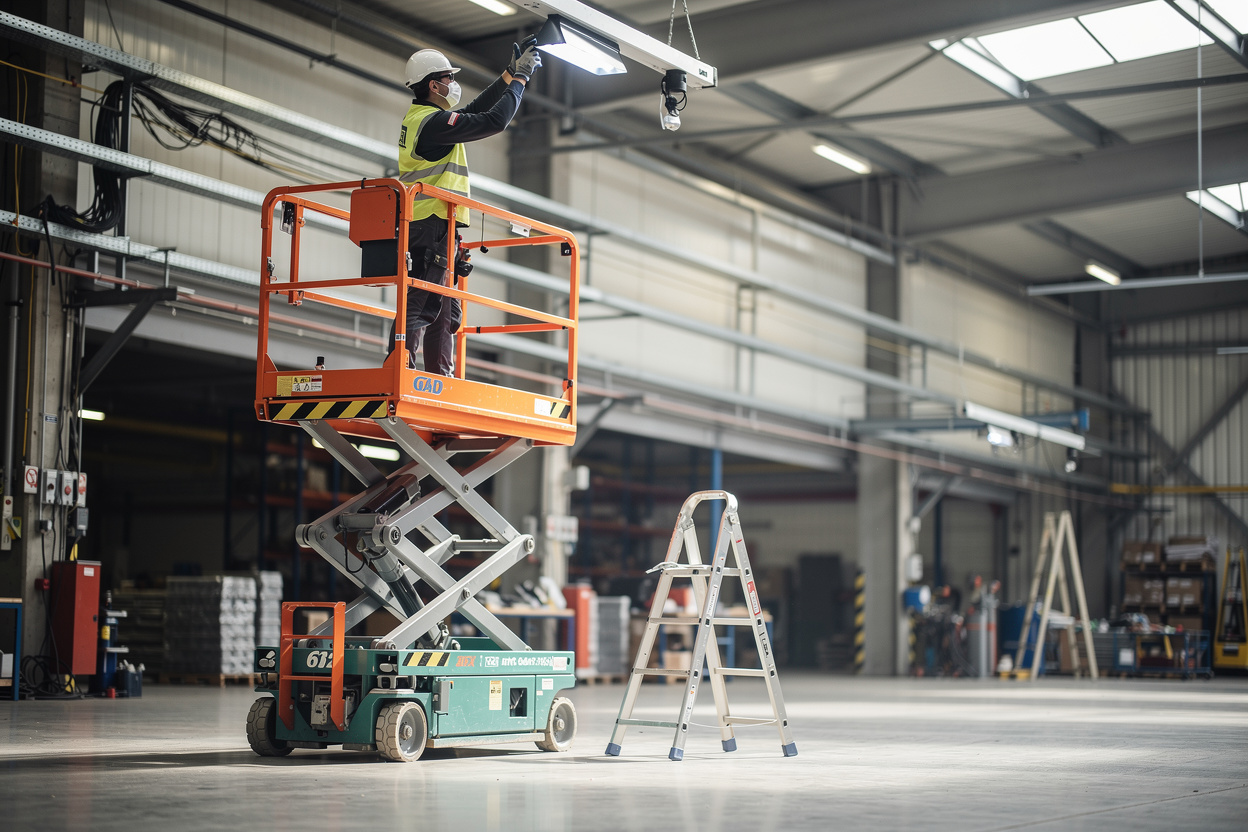
  • Working on a ladder, stepladder, scaffold, mobile tower or mobile elevating work platform.
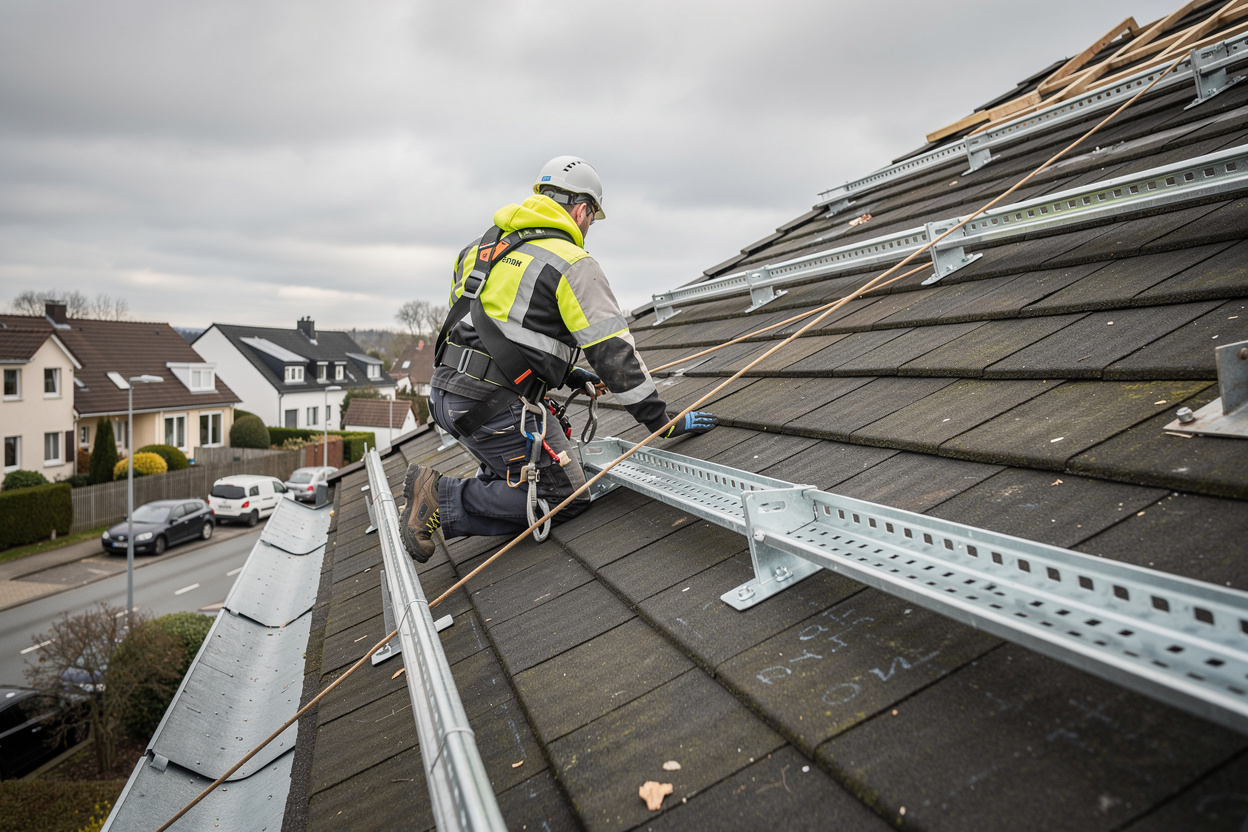
  • Working on a flat roof, a pitched roof or near an edge from which someone could fall.
  • Working near an opening or a fragile surface such as a skylight or an old roof sheet.
  • Working at ground level next to an excavation, a pit or a hole into which someone could fall.
  • Working on the back of a lorry, a trailer or a tanker.
  • Standing on a chair, a desk, a pallet or a stack of boxes to reach something.

It does not include walking up and down a permanent staircase in a building, but it does include almost every other situation where a fall is possible.

The Risks
Most fatal falls are under 2 metresAlmost every fall is preventable
The Risks

Falls from height are the leading cause of workplace fatalities in Great Britain and a major cause of serious injury. Health and Safety Executive figures show that year after year falls account for around a quarter of all work-related deaths, and construction, agriculture and maintenance work feature in most of them.

Whenever a task is carried out at an elevated level there is a risk to the person doing the work and to everyone in the area around and below them. A dropped tool from a scaffold, a hammer sliding off a roof or a section of guardrail falling from a tower can kill a person on the ground.

A large number of the most serious injuries and deaths happen in falls from below head height: from stepladders, from the backs of vehicles, from low platforms and from the bottom rungs of a ladder. What makes every one of these incidents so tragic is that, in almost every case, the fall was entirely preventable with the right planning and precautions.

Common High-Risk Tasks
Routine jobs, done quickly
Common High-Risk Tasks

The HSE has identified the everyday tasks in which falls from height happen most often. They are rarely dramatic, specialist jobs; they are routine tasks that people do quickly and without thinking:

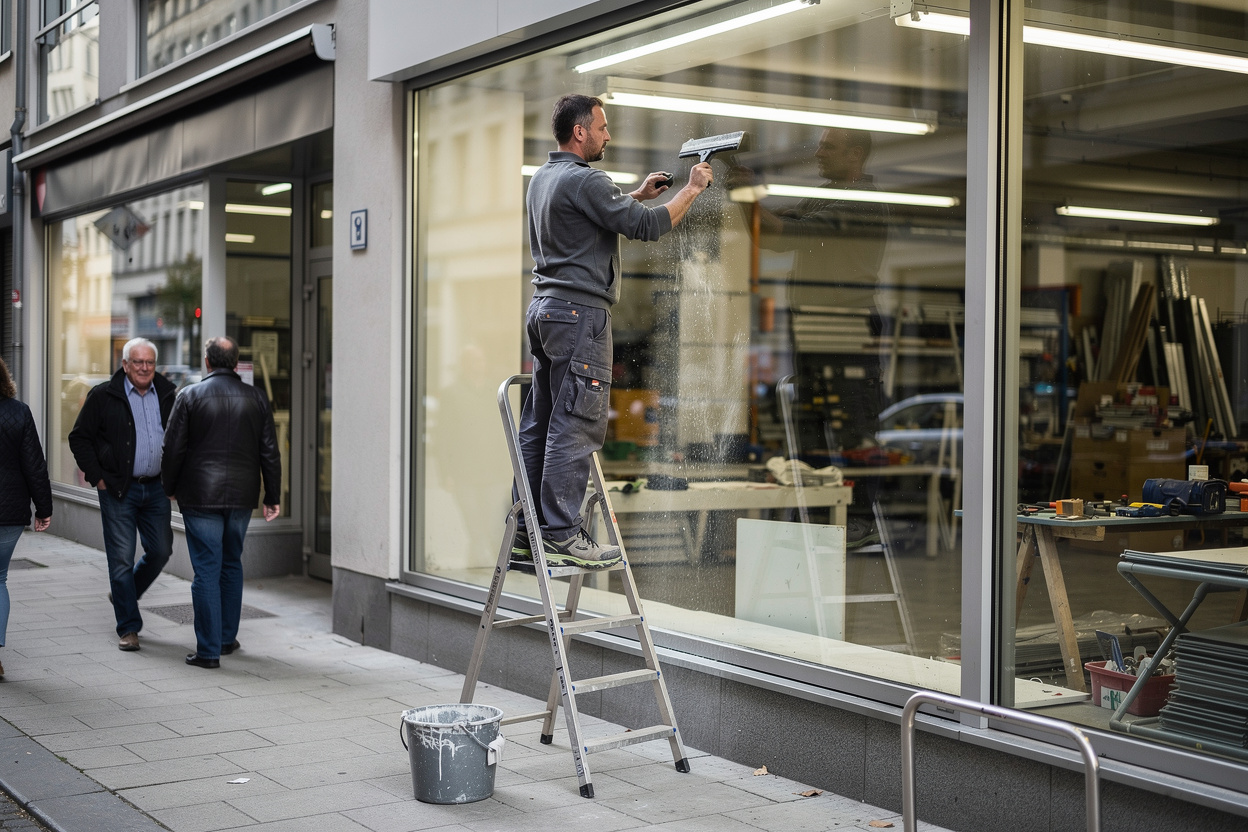
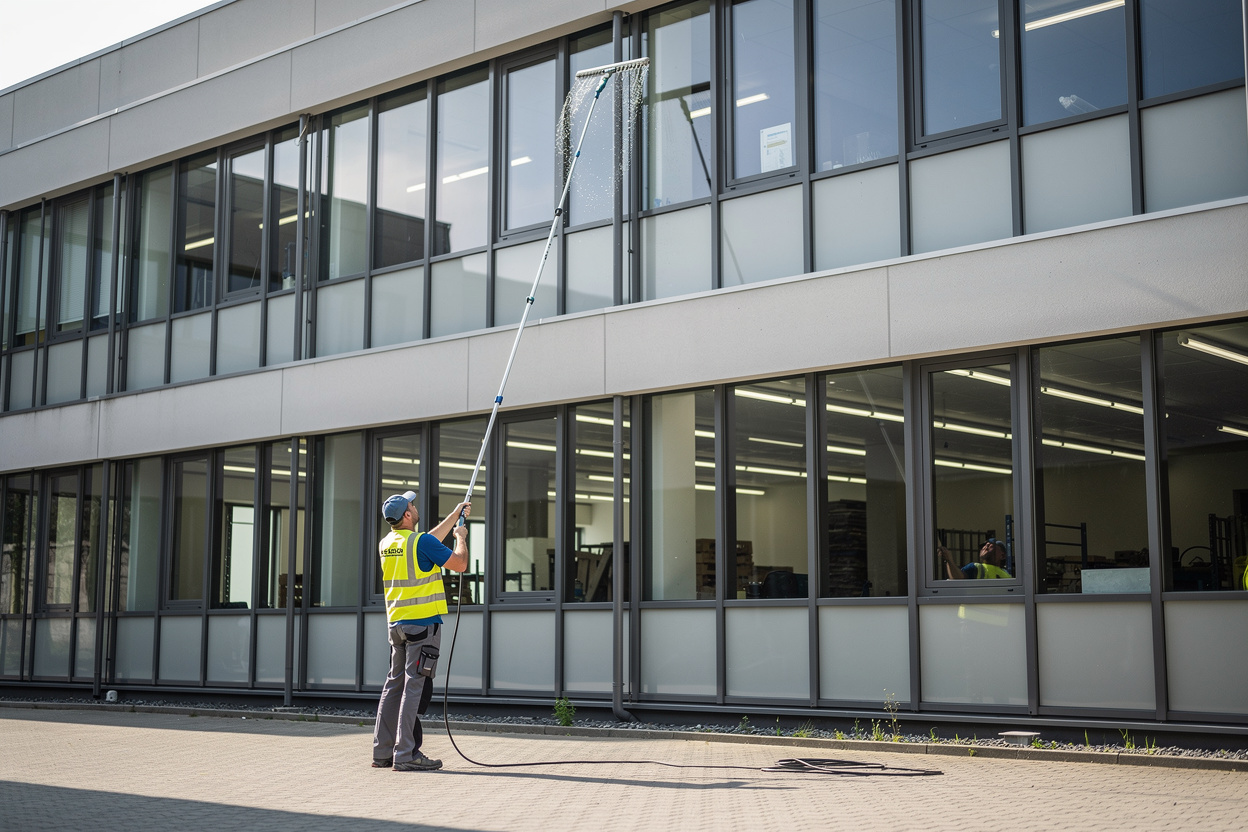
  • Window cleaning.
  • Roofing work, and any work on or near a fragile roof or roof light.
  • Loading and unloading a vehicle, and sheeting a lorry.
  • Machine and plant maintenance.
  • Gutter cleaning.
  • Putting up displays, decorations and signs.
  • Stacking and picking from shelves and racking.
  • Painting, decorating and changing light fittings.

If your job includes any of these, you are working at height, and this course applies to you.

Work at Height Legislation
Work at Height Regulations 2005Planned · supervised · competent · safe equipment
Work at Height Legislation

The main legislation is the Work at Height Regulations 2005, made under the Health and Safety at Work etc. Act 1974. It applies to all work at height, above or below ground level, in every sector.

If you employ, manage or supervise people who work at height, you must make sure the work is properly planned, appropriately supervised and carried out with suitable, safe equipment by people who are competent to do it. If you work at height yourself, you must follow the health and safety instructions you are given, use the equipment correctly, and report any problem or concern straight away.

The regulations cover, among other activities:

  • Working on a scaffold, a mobile tower or a mobile elevating work platform.
  • Working where a person could fall from an edge, through an opening or through a fragile surface such as a skylight or roof sheeting.
  • Working at ground level next to an opening, a hole or an excavation.
  • Working on the back of a lorry or trailer.
  • Using ladders and stepladders.
Employer Duties
Plan · equip · inspect · superviseProtect the people below
Employer Duties

Every employer must make sure that all work at height is properly planned and organised, that it is supervised, that it takes account of the weather, and that the people doing it are trained and competent. In practice the employer must:

  • Carry out a risk assessment: assess the risks of the work and record the control measures needed.
  • Select the right work equipment, following the hierarchy of control measures: avoid, prevent, then minimise.
  • Inspect and maintain the equipment: make sure every ladder, tower, platform and harness is inspected, well maintained and used correctly.
  • Put safe systems of work in place: for example, nobody works on, from or near a fragile surface unless effective controls stop them falling through it.
  • Prevent falling objects: stop materials and tools from falling from height, with toe-boards, brick guards, netting or exclusion zones, so that people below are protected.
  • Plan for emergencies and rescue: know how a person who has fallen or is stranded at height will be brought down safely.
Individual Responsibilities
See a defect? Report it — don't use it
Individual Responsibilities

Everyone who works at height has duties of their own under the regulations. You must:

  • Report unsafe activities: tell your supervisor or manager straight away about any unsafe work at height you see.
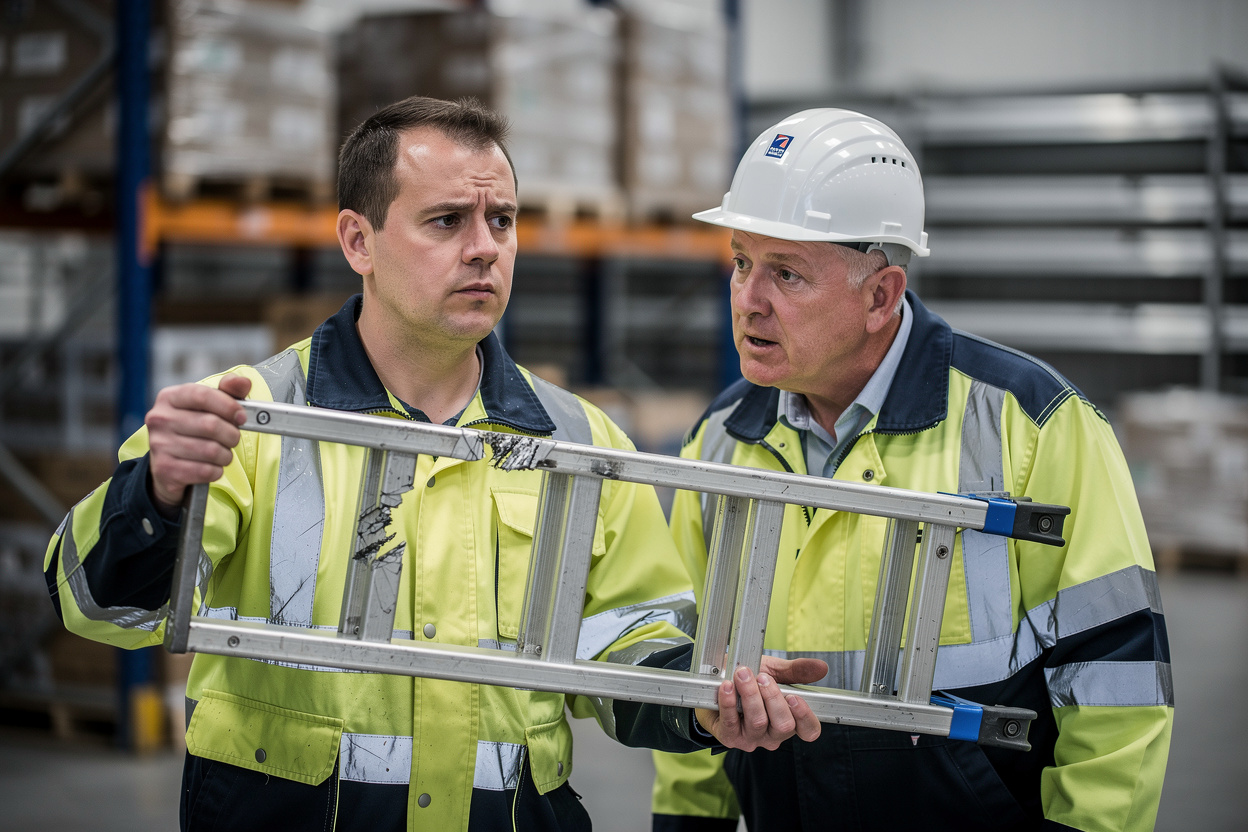
  • Report defective equipment: report a broken or missing ladder rung, a damaged guardrail, a frayed lanyard or a missing toe-board at once, and do not use the equipment until it is repaired.
  • Use the equipment provided: use the work equipment and the safety devices your employer gives you, in the way you were shown.
  • Follow your training and instructions: use the safe system of work, the manufacturer's instructions and the method statement for the job.
  • Look after other people: make sure that nothing you do puts anyone else at risk, including the people below you.

Every worker who takes these responsibilities seriously makes the workplace safer and cuts the risk of a fall, for themselves and for everyone around them.

The Hierarchy of Control
1 Avoid2 Existing safe place3 Collective — prevent4 Personal — prevent5 Collective — minimise6 Personal — last resort
The Hierarchy of Control

The regulations set out a hierarchy of control measures for work at height. They must be applied in this order, from the most effective to the least:

  • Avoid work at height wherever it is reasonably practicable, for example by using extension poles to clean windows from the ground.
  • Use an existing safe place of work where work at height cannot be avoided: a balcony, a parapet, or a platform that already has guardrails and toe-boards.
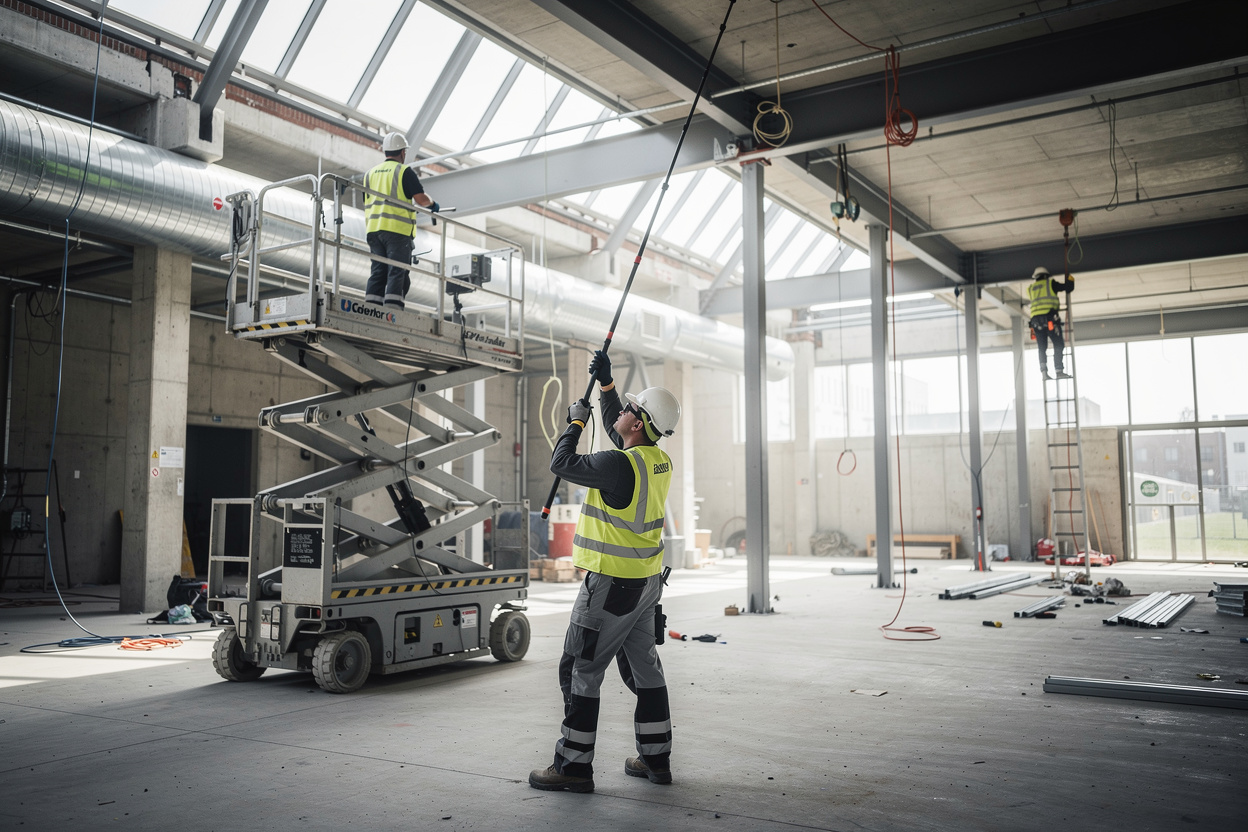
  • Use collective equipment to prevent falls: guardrails, scaffolds, mobile towers and mobile elevating work platforms, which protect everyone on them without any action by the user.
  • Use personal equipment to prevent falls: a harness with a short restraint lanyard that stops the person reaching the edge.
  • Use collective equipment to minimise the distance and consequences of a fall: safety nets or airbags beneath and around the work area.
  • Use personal equipment to minimise a fall: a fall arrest harness and lanyard, as a last resort.
  • Provide training, instruction and information at every level, so that everyone can do their work safely.
Choosing Control Measures
Collective before personalPPE = last resort
Choosing Control Measures

Your choice of control measure must follow the hierarchy. The key points to remember are:

  • Eliminate first: aim to remove the need for work at height, or to use an existing safe place, wherever it is reasonably practicable. These are the most effective ways of reducing the risk.
  • Collective before personal: if you cannot avoid work at height, collective equipment that protects everyone comes before personal protective equipment. PPE is the last resort and never a substitute for the measures above it.
  • Do not skip levels: if the job can be done from the ground with an extension pole, it is not acceptable to send someone up in a harness instead.
  • Meet the specific requirements: working platforms, scaffolds, fall arrest equipment and ladders each have their own rules on use, inspection and training, and those rules must be met as well.

Reasonably practicable means weighing the risk against the cost, time and effort of the control. Where the risk is significant, as it almost always is with a fall, the balance comes down firmly on the side of the control.

Avoiding Work at Height
Do it from the ground
Avoiding Work at Height

Avoiding the need to work at height, wherever it is reasonably practicable, is the first and most important step of the hierarchy. Ways of doing this include:

  • Long-handled tools: extension poles for window cleaning, gutter cleaning and painting let the work be done from the ground.
  • Redesigning the task: light fittings that can be lowered to the ground for bulb changes, or pipework and valves that are routed so they can be reached from floor level.
  • Assembling at ground level: build a structure or a piece of plant on the ground and lift it into position with mechanical lifting equipment, rather than assembling it at height.
  • Remote inspection: cameras on poles or drones for roof and gutter surveys, instead of sending a person up.

Every task that is moved to ground level removes the risk of a fall completely. That is why avoidance is always the first question to ask when planning any job at height.

Risk Assessment
Activity · hazards · who · controls · rescue
Risk Assessment

When work at height cannot be avoided, a risk assessment must be carried out before the work starts. The assessment must be recorded and must cover:

  • The work activity: what will be done, where, for how long, and who has access to the area.
  • The hazards: the ways in which people or objects could fall during each activity, including fragile surfaces, edges, openings, weather and unstable ground.
  • Who is at risk: employees, contractors, visitors and members of the public, above and below the work.
  • The control measures: the measures chosen from the hierarchy to eliminate or reduce each risk, and the equipment, training and supervision needed to make them work.
  • Emergency arrangements: how a person will be rescued if they fall or become stranded at height.

Module 2 takes you through the risk assessment process step by step.

Summary

In this module you have learnt that:

Falls from height are the leading cause of workplace deaths in Great Britain. Many of the most serious falls are from below head height, and almost all of them are preventable.

The main legislation is the Work at Height Regulations 2005. Employers must plan, supervise and equip work at height properly, and employees must follow instructions, use the equipment and report defects.

The hierarchy of control puts avoiding work at height first, then existing safe places, then collective equipment, and personal protective equipment last.

Every work at height activity needs a recorded risk assessment covering the activity, the hazards, the people at risk, the control measures and the rescue arrangements. In the next module we look at how that assessment is carried out.

Knowledge Check
What is the first step in the hierarchy of control when planning work at height?
Select one answer, then press Check.
Provide employees with fall arrest harnesses
Avoid working at height where it is reasonably practicable
Use safety nets to reduce the distance of a fall
Put up warning signs around the area
Correct — well done. You can continue.
Not quite. Think about what you have just learnt in this module, and try again.
Get the full course →Answer the question to unlock the next module.
Page 1 of 15