Cleaning and Cross-Contamination in Catering
A kitchen can look tidy and still transfer harmful bacteria or allergens into ready-to-eat food. Cross-contamination happens when something unsafe moves from one food, surface, hand or piece of equipment to another. A raw chicken board used for salad is an obvious example. A fridge handle touched with contaminated gloves, or a spoon moved between dishes containing different allergens, may be easier to miss.
Separate raw and ready-to-eat food
Keep raw meat and poultry apart from foods that will not receive a further cooking step. Use separate preparation areas and equipment where the business can. If space is limited, plan work in time: prepare ready-to-eat foods first, then raw foods, followed by effective cleaning and disinfection. Store raw foods in covered containers below ready-to-eat foods so drips cannot reach them. Keep deliveries and display arrangements under the same separation rules.
Colour-coded boards can help staff recognise equipment, but colour is only a visual aid. It does not make a dirty board safe. Complex equipment that cannot be cleaned adequately between raw and ready-to-eat uses may need to be dedicated to one purpose. Managers should check whether the layout and workflow match the written method during the busiest shift, not only when the kitchen is empty.
Know the difference between cleaning and disinfection
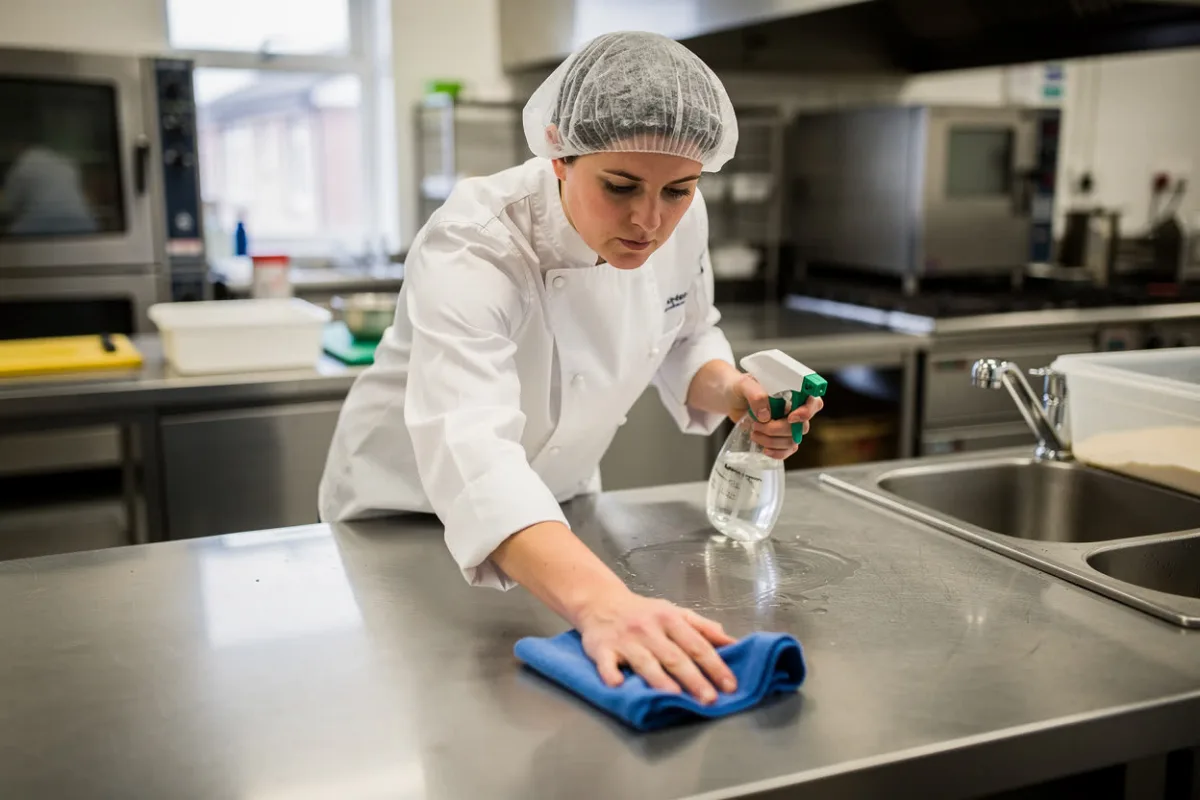
Cleaning removes grease, debris and visible soil. Disinfection reduces microorganisms after surfaces have been cleaned. Follow the product instructions for dilution, contact time and any rinsing requirement. A quick wipe with a cloth may spread contamination. The FSA’s E. coli guidance says disinfectants used to control that risk should meet BS EN 1276, BS EN 13697 or an equivalent standard at the recommended use conditions.
Write a schedule that names the item, method, frequency and responsible person. Include easy-to-forget contact points such as taps, fridge handles, slicers, scales, probe thermometers and reusable cloths. Clean as you go after contamination events, and still complete the planned end-of-shift cleaning. Replace damaged equipment that cannot be cleaned effectively.
Hands, clothing and illness
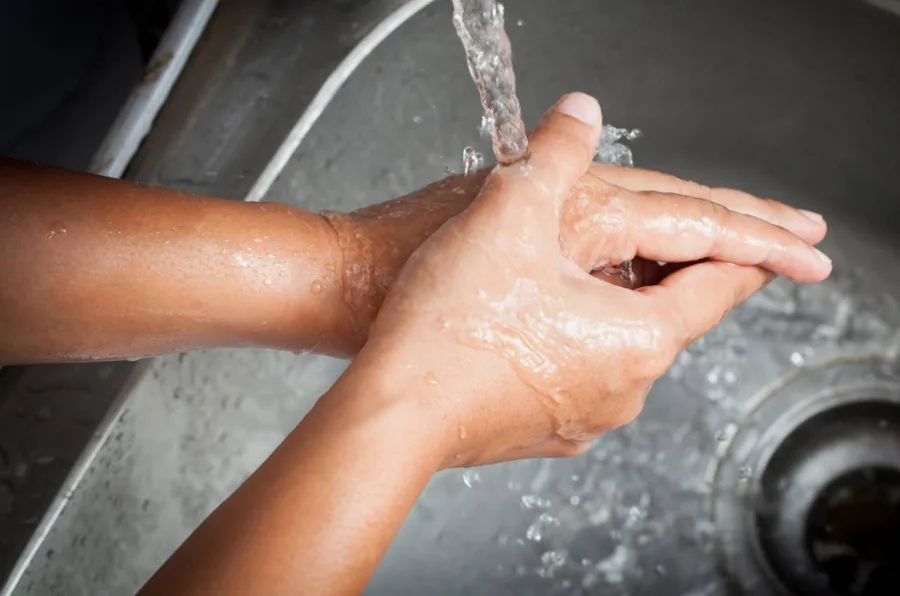
Food handlers need to wash hands with soap and warm running water at appropriate points: before handling ready-to-eat food, after raw food, after the toilet, after cleaning and after touching waste or a phone. Gloves are not a substitute for handwashing; they can transfer contamination too. Staff should understand the business’s illness reporting rule and tell a supervisor promptly about vomiting, diarrhoea or other symptoms that could affect food safety.
Provide enough handwash facilities, soap and hygienic drying materials. If a sink is blocked by trays or used for washing vegetables, staff are less likely to follow the intended method. Good layout and supplies are part of management, not simply a matter of telling people to be more careful.
Allergen cross-contact needs its own check
Bacteria and allergens are different hazards. Disinfectant can reduce bacteria, but the critical allergen control is to remove the allergenic residue from equipment and surfaces. Use an appropriate cleaning method, check hard-to-clean crevices and avoid shared utensils or oils where the risk cannot be controlled. When a customer asks for a dish free from a particular allergen, staff need reliable ingredient information and a realistic assessment of preparation conditions.
Do not use a blanket “may contain” statement to cover a preventable failure to clean. The FSA advises precautionary allergen labelling only where a real cross-contact risk remains after risk management. Update procedures when recipes, ingredients or equipment change.
Train and verify
Show staff the actual stations, products and cleaning chemicals they use. Ask them to demonstrate the full procedure, including contact time and probe cleaning. A supervisor should observe and correct practice regularly. Our Food Hygiene for Catering Level 2 course covers the principles; the local cleaning schedule turns them into daily actions.
See the FSA’s cross-contamination guidance and its allergen cleaning review for further detail. Treat a repeated contamination near-miss as a reason to change the process, not just repeat a reminder.
Catering Food Hygiene training online
Self-paced online course with an assessment and a downloadable certificate.
Pressure-test the cleaning schedule
Walk through one complete service and watch where hands and utensils travel. Notice whether a cook touches a fridge handle after raw poultry, whether a ready-to-eat garnish station sits in a splash zone, and whether cloths are reused between tasks. Then compare the observations with the schedule. Add the overlooked contact points and give staff enough time to do the full method, including chemical contact time. If the schedule is impossible during service, change the workflow or equipment. A document that staff cannot follow is unlikely to control contamination.
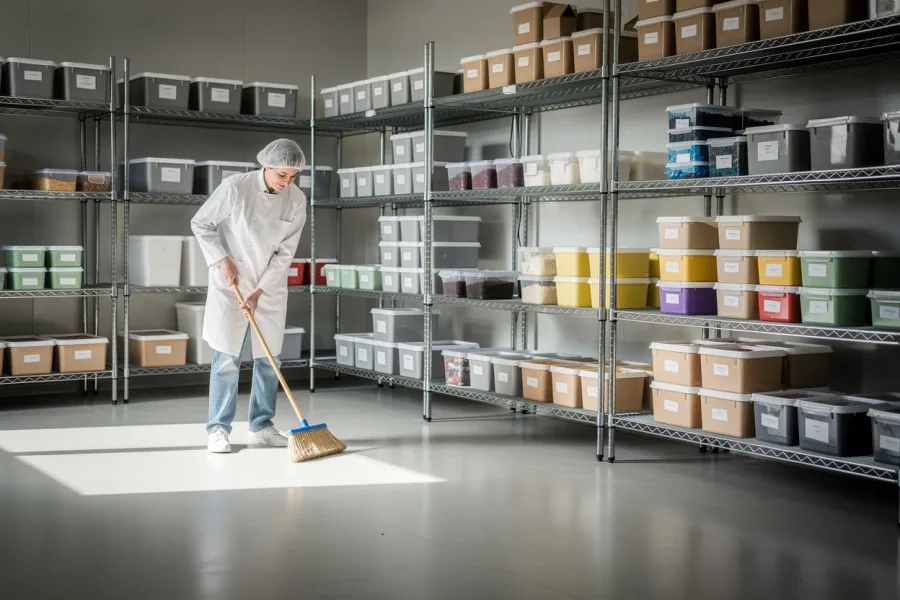
Check storage too. A sealed raw-meat tray on a lower shelf and a labelled ready-to-eat container above it protect food only while shelves remain organised during deliveries and rush periods. Include storage checks in supervision.
Consider how the kitchen handles a spill of raw meat juices during service. Staff need a way to stop nearby ready-to-eat preparation, protect or discard exposed food, clean and disinfect the affected area, and resume only when it is safe. Practise the response before it happens.