Safe Food Temperatures for Catering
Temperature control is one of the most useful ways to reduce food poisoning risks in a catering kitchen. It slows bacterial growth in chilled food, helps make cooked food safe and keeps hot food out of conditions where bacteria can multiply. The numbers matter, but so does the process: staff must know where to measure, when to check and what action to take if a result is outside the business’s safe method.
Chilled food: the fridge target and the legal limit
In England, Wales and Northern Ireland, food that needs chilling is generally subject to a maximum holding temperature of 8°C, with some specific exemptions. The Food Standards Agency advises setting the fridge to 5°C or below so the food itself stays within the limit. A display reading of 5°C does not guarantee every product is at that temperature: overloading, warm deliveries and a frequently opened door can create warm spots. Check the appliance and, when needed, the food.
Record fridge checks at the frequency in your food safety plan, with daily opening checks a common SFBB routine. If a reading is too high, check the thermometer and door, move vulnerable food to safe storage if appropriate and assess how long it may have been warm. Do not simply turn the dial down and tick the record as satisfactory. Document the decision about affected food.
Cooking: use time and temperature together
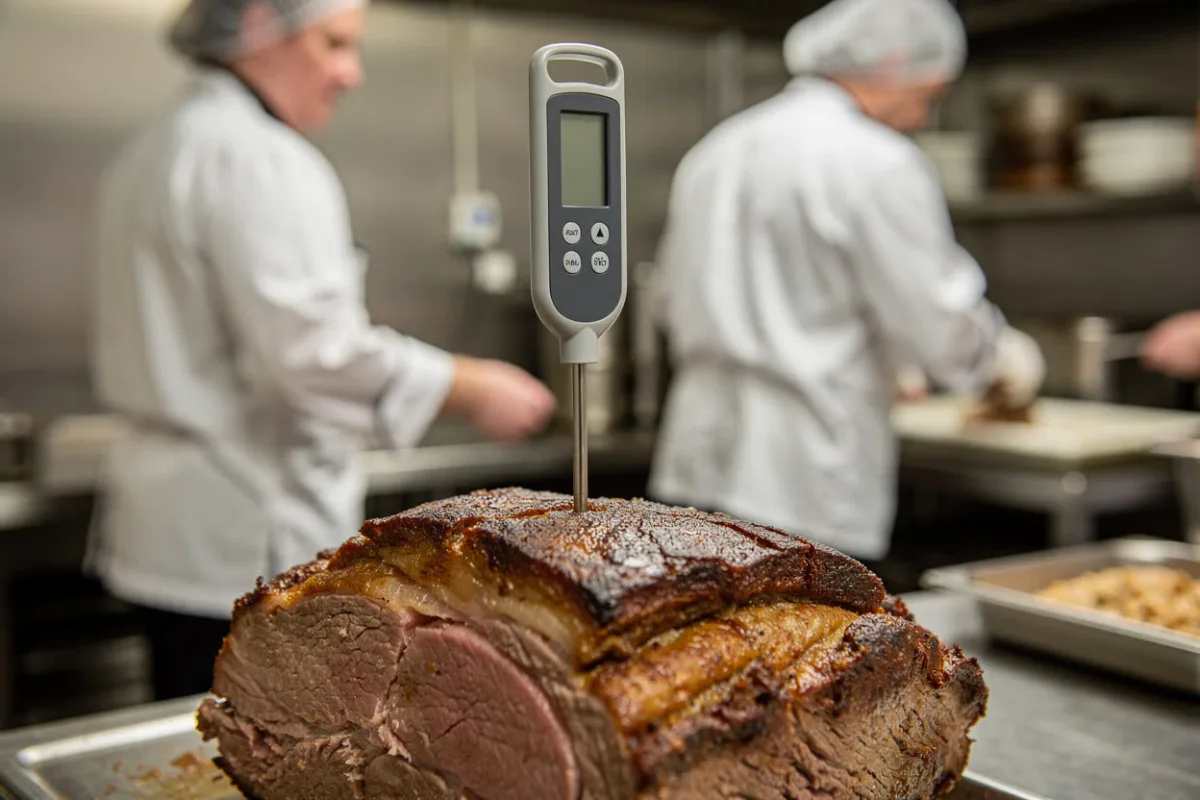
The FSA gives equivalent combinations for the centre of food, including 70°C for two minutes or 75°C for 30 seconds. Insert a clean probe into the thickest part, avoiding bones or the tray, and follow the safe method for the product. Poultry and pork require thorough cooking because harmful bacteria can be present throughout. Whole cuts of beef may involve different controls; do not apply one rule indiscriminately to every product.
Staff should understand how their equipment behaves. A large batch of chicken pieces may heat unevenly. Microwave cooking can leave cold spots, so follow the method for stirring and standing. A logged oven setting is not proof of a safe core temperature. Verify the method with a probe and recheck it when portions, equipment or recipes change.
Hot holding and reheating
Food kept hot for service should be held at 63°C or above. Preheat the unit and put food into it already hot; a bain-marie is generally for holding, not cooking cold food to a safe temperature. Take readings from the food, not only the equipment display. If food falls below the limit, follow your documented corrective action promptly. FSA guidance describes limited time allowances and options, but those must be managed carefully; do not treat two hours at an unsafe temperature as a routine serving method.
Reheat food thoroughly until it is steaming hot throughout, using the business’s validated method and checking with a clean probe where appropriate. Reheating is not an answer to every earlier failure: unsafe cooling or uncertain storage history can make disposal the safer choice. Follow the FSA and your local authority’s guidance for the product and operation.
Cooling and transport
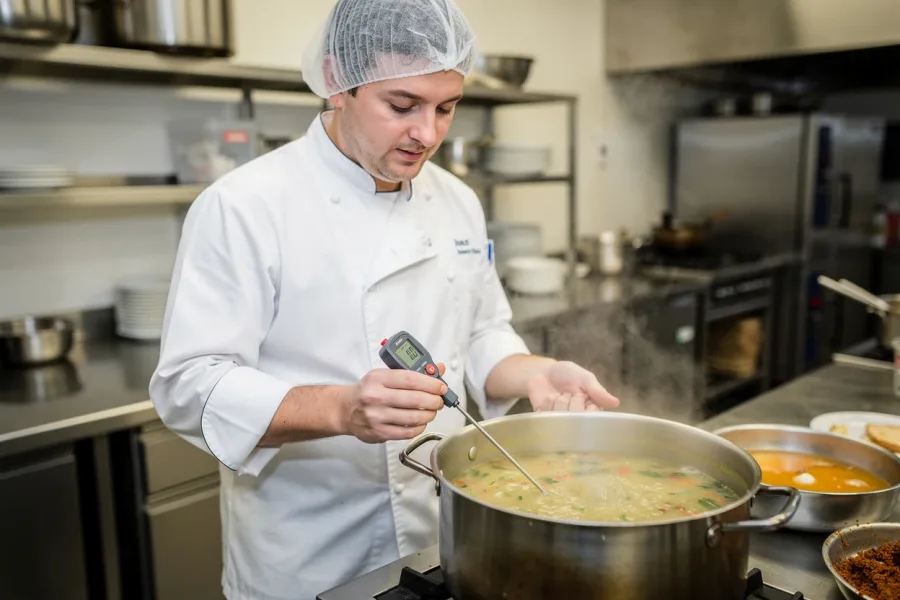
Cool cooked food that will be chilled as quickly as your safe method requires. Divide large quantities into shallow containers, use suitable equipment and keep the food protected from contamination. Putting a deep pan of hot stew directly into a packed fridge can warm surrounding foods while the centre cools too slowly. For deliveries and event catering, plan how chilled and hot foods will be held and checked during the journey, not only in the kitchen.
Make readings reliable
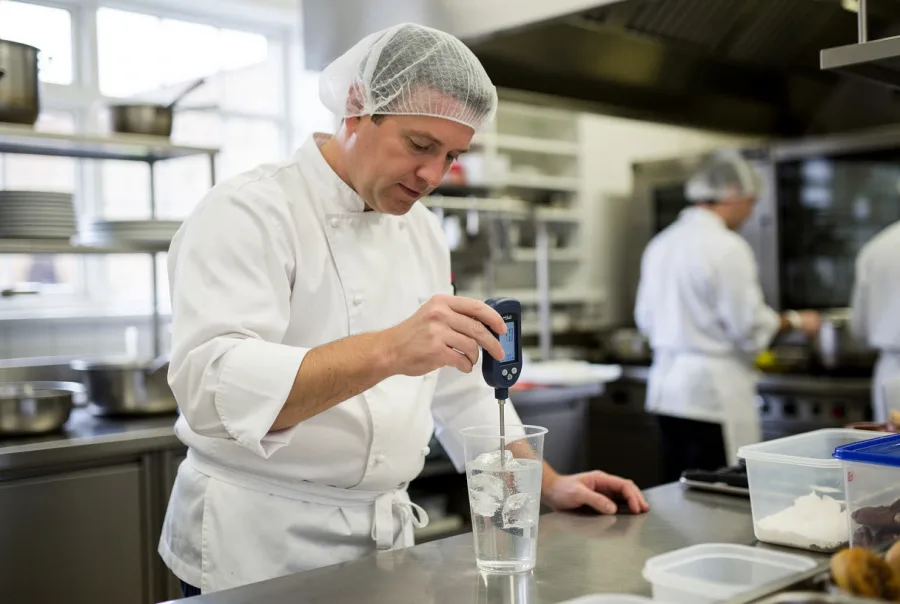
Clean and disinfect probe thermometers between foods, especially after raw products. Check that the probe works properly and record corrective action when equipment fails. Teach staff exactly where to place it and how long to wait for a stable reading. Our Food Hygiene for Catering Level 2 course supports this foundation, followed by hands-on instruction using your own menu and equipment.
Use the FSA’s cooking temperature guidance, chilling guidance and SFBB hot-holding method to check the relevant limits. Build a short procedure that staff can actually apply during service.
Catering Food Hygiene training online
Self-paced online course with an assessment and a downloadable certificate.
What to do when a check fails
Give staff a written escalation route. A failed cooking check normally means continuing to cook and checking again. A hot-holding failure may require reheating, safe chilling or disposal, depending on the business’s method and the time involved. A fridge failure needs an assessment of affected foods, not just the air temperature at the moment somebody notices it. Where time or storage history is unknown, do not invent a safe answer. Ask the responsible manager to make and record the decision. Afterwards, identify the cause: a broken seal, overloaded cabinet, incorrect set point or missed check may need a different fix.
Train staff to write down both the reading and the action. That turns a temperature log into evidence of control.
Temperature records should follow the food. A batch cooked safely can still become unsafe during slow cooling or unsuitable transport. Trace the journey of your highest-risk dish, write down where each check occurs and make sure the responsible person has a working thermometer at that point.