
Safe Lifting Technique at Work: A UK Guide
A safer lift starts before anyone bends towards the load. The first question is whether the lift is needed at all. Can a suitable aid move the item, or can it be delivered closer to its destination? If manual lifting remains necessary, assess the load, the route and the person doing the work. Good technique reduces avoidable strain, but it cannot make an inherently unsafe job safe.
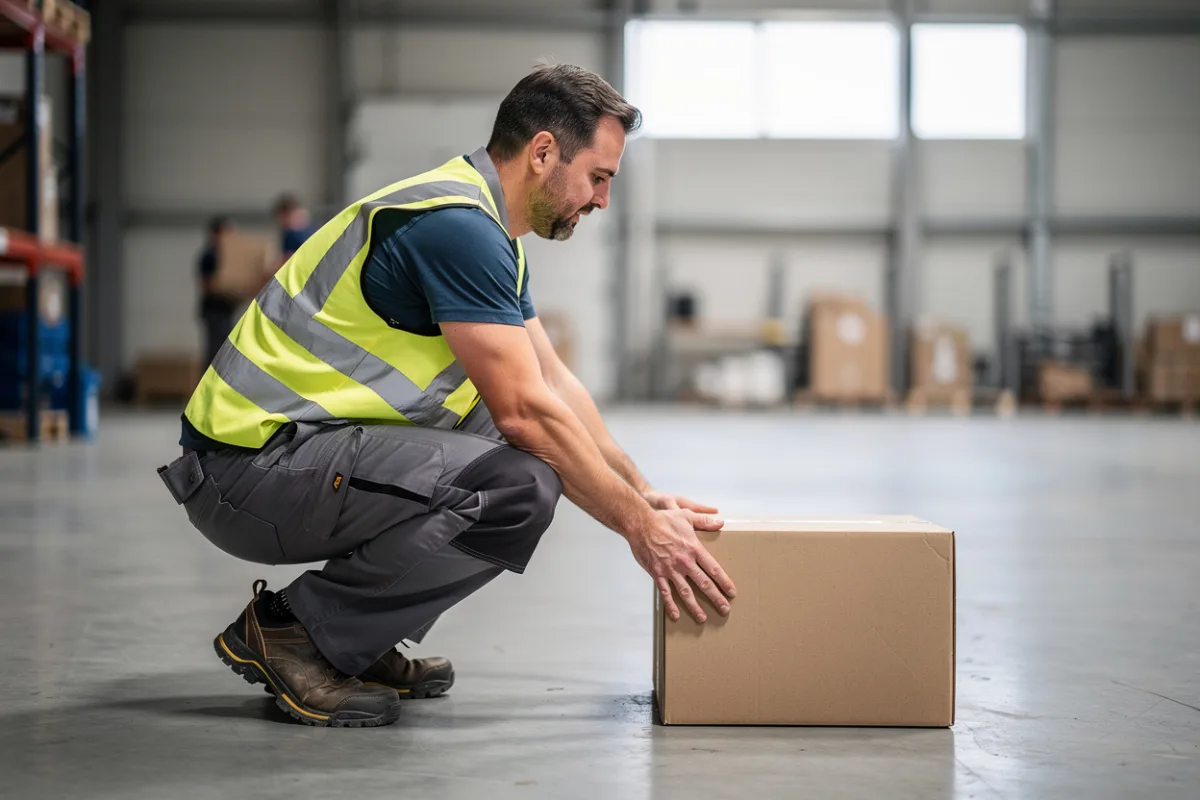
Check whether the task should be changed
The Manual Handling Operations Regulations 1992 require employers to avoid hazardous manual handling where reasonably practicable, assess what remains and reduce the risk. That order matters. A worker cannot solve a long, repeated floor-to-shoulder lift just by remembering to bend their knees. Change the height, package size, frequency, route or equipment first.
There is no universal legal maximum weight for lifting in the UK. Size, shape, grip, frequency, distance and individual capability all affect the risk. If the item is too awkward to control or its weight is unknown, stop and find a safer method.
Plan the move
Know where the load will go and how it will be set down. Clear the route, check the floor and make sure the destination is ready. Look for sharp edges, loose contents or an uneven centre of gravity. Use a handling aid if one is available and appropriate. If another person is needed, agree the route and a clear signal for lifting, turning and lowering before starting.
Position yourself close to the load where possible. Put your feet in a stable stance with room to move. Avoid reaching across obstacles. If the item begins below a comfortable level, consider raising it by changing the set-up rather than repeatedly lifting from the floor.
Move smoothly and keep control
Get a secure grip. Keep the load as close to your body as the shape and task allow. Lift in a controlled way, using your legs and body together without a sudden jerk. HSE advises a slight bend of the back, hips and knees at the start rather than an extreme squat or a rigid straight back. Keep your head up once the load is secure so you can see where you are going.
Avoid twisting your trunk while holding the load. Move your feet to turn. Keep the movement smooth and do not hurry to match a conveyor or another person’s pace if you cannot control the item. If you lose your grip or balance, do not try to save a falling object at the cost of your own safety.

Set down with the same care
Choose a stable landing place. Keep the load controlled as you lower it, avoid trapped fingers and adjust its final position after its weight is supported. Do not make a final long reach just to place it neatly. If the destination forces an awkward posture, change the arrangement or use an aid.
Repeated handling deserves extra attention. A lift that feels easy once can still cause strain when done throughout a shift. Suitable breaks, different task organisation and better working heights may matter more than a reminder about posture.
Know when to stop
Stop if the load is heavier than expected, shifts inside its packaging, blocks your view or the route becomes unsafe. Ask for help or a different aid. Report pain, a near miss or defective equipment promptly. A manager should review the task, not simply tell the worker to be more careful.
HSE’s good handling technique guidance stresses that technique is only one part of risk reduction. Training should fit the loads and environment workers actually encounter, and practical instruction may be needed to correct unsafe actions. Our online manual handling course covers the general principles; apply them with your workplace’s assessment, equipment and supervision.
Common lifting myths
“Keep your back perfectly straight” is too rigid as a universal instruction. HSE describes a stable stance and a slight bend at the back, hips and knees, with the load close and movement smooth. The position depends on the load and space; extreme positions should be avoided. “Bend your knees and any weight is safe” is also false. A heavy, unstable or bulky load may require an aid or redesign regardless of posture.
“Two people can lift twice as much” is unreliable. Team handling needs coordinated timing, compatible heights, communication and enough space. Someone crossing the route or one worker losing grip can change the balance. Assess the team task and prefer a suitable aid where it removes the hazard.
Manual Handling training online
Self-paced online course with an assessment and a downloadable certificate.
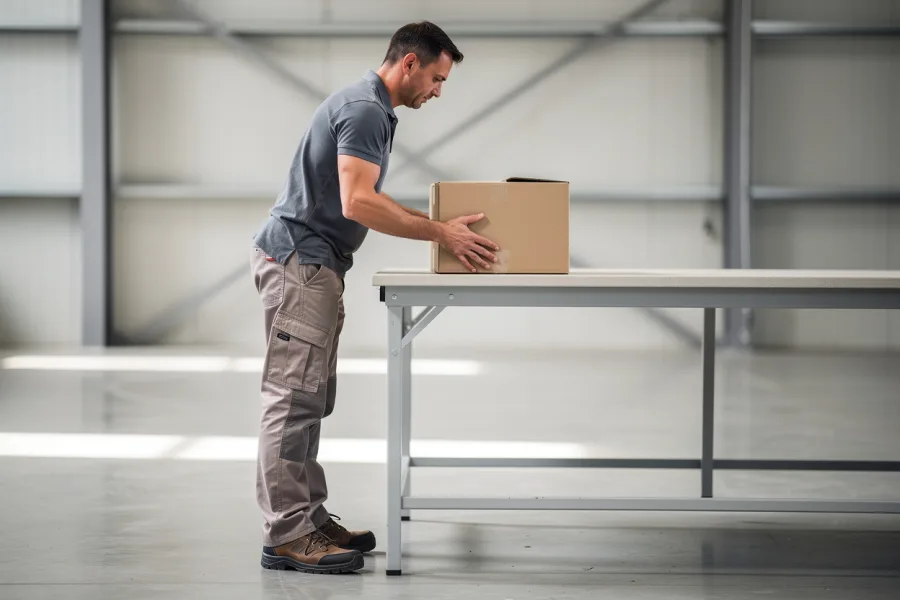
Practise with the real task
A generic explanation is most useful when followed by a look at the work people do. Show where the load starts and ends, what aid is available and how to report change. Observe a normal lift where the risk warrants it, correct unsafe movement and ask whether the task can be improved. If workers repeatedly struggle despite instruction, change the job. Technique supports a safer system; it cannot conceal poor design.