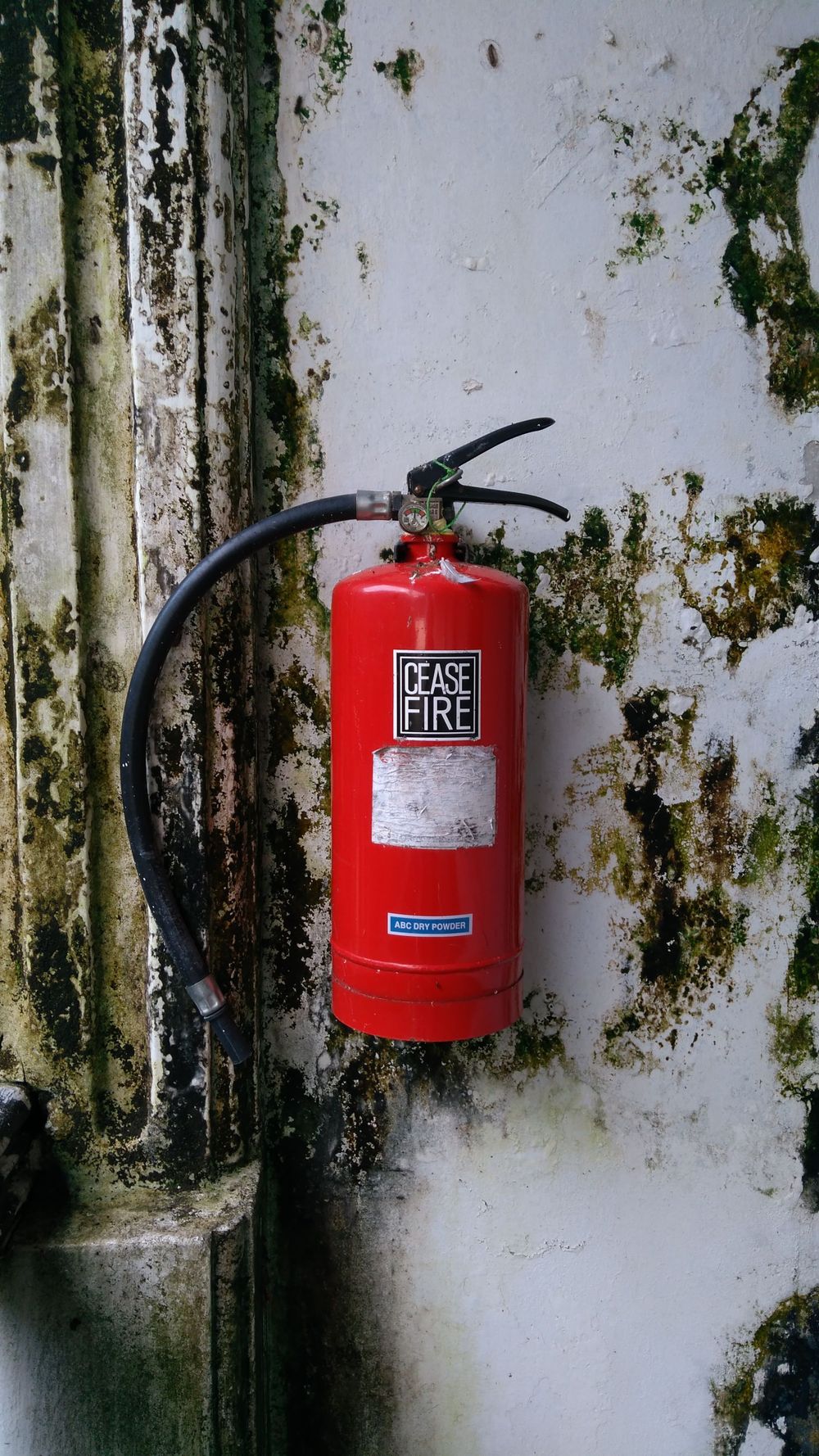
How to Use a Fire Extinguisher: The PASS Method
A fire extinguisher is only useful if you know how to use it and which one to reach for. Grab the wrong type and you can make a fire far worse. This guide covers the PASS method, the UK colour codes for every extinguisher type, and the moments when the safest thing to do is to walk away.
The PASS method, step by step
Almost every hand-held extinguisher in the UK works the same way, so firefighting instructors teach a simple four-letter aid: PASS. Once you know it, you can operate any standard extinguisher under pressure.
- P — Pull the pin. Pull out the safety pin at the top of the extinguisher. This breaks the tamper seal and frees the operating lever.
- A — Aim low. Point the nozzle, hose or horn at the base of the flames, not at the top. The fuel is at the base, and that is where the fire must be smothered.
- S — Squeeze the handle. Squeeze the lever slowly and evenly to release the extinguishing agent. Keep the extinguisher upright.
- S — Sweep side to side. Move the nozzle steadily from side to side across the base of the fire until it is out. Watch the area afterwards in case it reignites.
Stand a safe distance back when you start — usually a couple of metres — and move closer as the flames die down. Always keep an exit behind you so you can retreat quickly if the fire grows.
Aim at what is burning, not at the flames. Flames are just the visible result; the fire lives at the base, and that is where the extinguisher has to land.
Extinguisher types and UK colour codes
In the UK, all extinguisher bodies are predominantly red, with a coloured band or label that identifies the contents. Matching the extinguisher to the type of fire is critical. Fires are grouped into classes: Class A (solids such as wood and paper), Class B (flammable liquids), Class C (flammable gases), Class D (metals), electrical fires, and Class F (cooking oils and fats).
Water — red label
Water extinguishers tackle Class A fires involving ordinary solids. They are cheap and effective on paper, wood and textiles, but must never be used on live electrical equipment or burning liquids.
Foam — cream label
Foam (AFFF) extinguishers cover Class A and Class B fires, smothering burning liquids by forming a blanket over the surface. They are a popular all-rounder for offices and many workplaces.
Carbon dioxide (CO2) — black label
CO2 extinguishers are designed for electrical fires and Class B liquids. They displace oxygen and leave no residue, which makes them ideal around computers and server rooms. Hold the horn by its handle, as it becomes extremely cold.
Dry powder — blue label
Dry powder is versatile, working on Class A, B and C fires and on electrical risks, with special versions for Class D metal fires. However, the powder reduces visibility, is messy, and is generally not recommended for use in enclosed spaces because it can be inhaled.
Wet chemical — yellow label
Wet chemical extinguishers are made for Class F fires — burning cooking oils and deep-fat fryers. They cool the oil and create a soapy seal over its surface. Every commercial kitchen should have one.
HSE-aligned courses from £23
Self-paced online training with a same-day certificate — including Manual Handling, Fire Safety and First Aid.
When NOT to tackle a fire
Knowing when to fight a fire is as important as knowing how. An extinguisher is for a small fire that has only just started — never a developed blaze. Do not attempt to tackle a fire if any of the following are true:
- The fire is bigger than a small wastepaper bin or is spreading quickly
- There is a lot of smoke, or smoke is filling the room
- You do not have the correct type of extinguisher for the fire
- The fire is between you and your only escape route
- You have not been trained, or you simply feel unsafe
If in doubt, get out. Raise the alarm, leave the building, close doors behind you to slow the spread, and call 999. Your life is worth far more than any property. This is exactly the kind of judgement that a trained fire marshal develops, and it is why fire training pairs so naturally with workplace first aid skills.
Key takeaways
- Use the PASS method: Pull the pin, Aim low at the base, Squeeze the handle, Sweep side to side.
- UK extinguisher labels: water (red), foam (cream), CO2 (black), dry powder (blue), wet chemical (yellow).
- Match the extinguisher to the fire class — using the wrong type can be dangerous, especially on electrical or cooking-oil fires.
- Only tackle small, early fires, and never one that blocks your exit or is filling the room with smoke.
- If in doubt, get out, raise the alarm and call 999 — property is replaceable, people are not.
Practice makes the difference
Reading about the PASS method is a start, but confidence comes from training. Online fire safety courses cover the theory, the colour codes and the decision-making, and hands-on extinguisher sessions build the muscle memory. Our HSE-aligned courses start at £23 with a same-day certificate, so your whole team can be ready long before they ever need to lift an extinguisher in anger.