Classes of Fire Explained (A, B, C, D, F and Electrical)
Not all fires are the same, and the extinguisher that puts one out can make another far worse. In the UK, fires are grouped into classes by the fuel that feeds them. Knowing the classes is the quickest way to choose the right extinguisher — and to avoid a dangerous mistake.
When people picture firefighting, they tend to imagine pointing any nearby extinguisher at the flames. In reality, the type of fuel decides everything. Use water on burning cooking oil and the result can be a violent fireball; use a water extinguisher on live electrics and you risk a serious shock. That is why the UK uses a standardised system of fire classes, each matched to the extinguishers that are safe and effective against it.
Understanding the classes is a core part of workplace fire safety, and it sits naturally alongside your wider duties under the Regulatory Reform (Fire Safety) Order 2005. Below we explain each class, the fuels involved, the right extinguisher, and the errors that catch people out.
Why we classify fires at all
Every fire needs fuel, heat and oxygen — the fire triangle. Extinguishers work by removing one or more of those elements: cooling the fuel, smothering the oxygen, or interrupting the chemical reaction. Because different fuels behave so differently, no single agent is safe and effective against them all. The class system tells you, at a glance, which extinguisher to reach for.
Class A — solid combustible materials
Class A is the everyday office and household fire: wood, paper, cardboard, textiles, furniture and most plastics. These solid materials leave glowing embers, so they need to be cooled right through to stop them reigniting.
Best extinguisher: water or water additive, which cools the burning material. Foam also works well. Most general-purpose premises rely on water or foam units for class A risks.
Class B — flammable liquids
Class B covers flammable and combustible liquids such as petrol, diesel, paint, white spirit, paraffin and many solvents. These fires spread fast and can flow, so the priority is to smother the surface and cut off the oxygen.
Best extinguisher: foam (for liquids that do not flow freely), CO2 or dry powder. Never use water on a class B fire — it can spread the burning liquid and intensify the flames.
Class C — flammable gases
Class C fires involve flammable gases such as propane, butane, methane and natural gas. These are particularly hazardous because of the explosion risk.
The golden rule: the safest action is almost always to isolate the gas supply at the valve. Tackling the flame without stopping the gas can allow an explosive build-up. Dry powder extinguishers are rated for class C, but turning off the supply comes first.
The right extinguisher only matters once you have decided it is safe to fight the fire at all. If in any doubt, raise the alarm, get everyone out, and leave it to the fire service.
Class D — metals
Class D fires involve combustible metals such as magnesium, aluminium swarf, lithium, sodium and titanium. These burn at extreme temperatures and react violently with water, which can cause explosions.
Best extinguisher: a specialist class D powder (often called an L2 or M28 powder), applied with a special applicator. Standard extinguishers must never be used on metal fires. If your workplace produces metal dust or swarf — for example a machine shop — this is a risk to single out in your assessment.
Fire Safety training from £23
Self-paced, HSE-aligned, certificate the same day — £23 per person.
Electrical fires
Fires involving live electrical equipment are not given a letter in the UK, but they are a category in their own right because of the shock hazard. Think of overloaded sockets, faulty chargers, server racks and machinery.
Best extinguisher: CO2, which leaves no residue and will not conduct electricity. Once the power is isolated, an electrical fire often becomes a class A fire that can be tackled accordingly. Water and foam must be kept away from live equipment.
Class F — cooking oils and fats
Class F is the commercial kitchen fire: cooking oils and fats in deep-fat fryers and pans. These burn extremely hot and cannot be put out with ordinary extinguishers.
Best extinguisher: a wet chemical extinguisher, which cools the oil and forms a soapy layer over the surface to seal out oxygen. Crucially, never throw water on a chip-pan or fryer fire — the water flashes to steam and ejects burning oil in a fireball. A fire blanket is also valuable in a kitchen.
Common mistakes that make fires worse
- Water on liquids, fats or electrics. The single most dangerous error — it spreads the fire or risks electrocution.
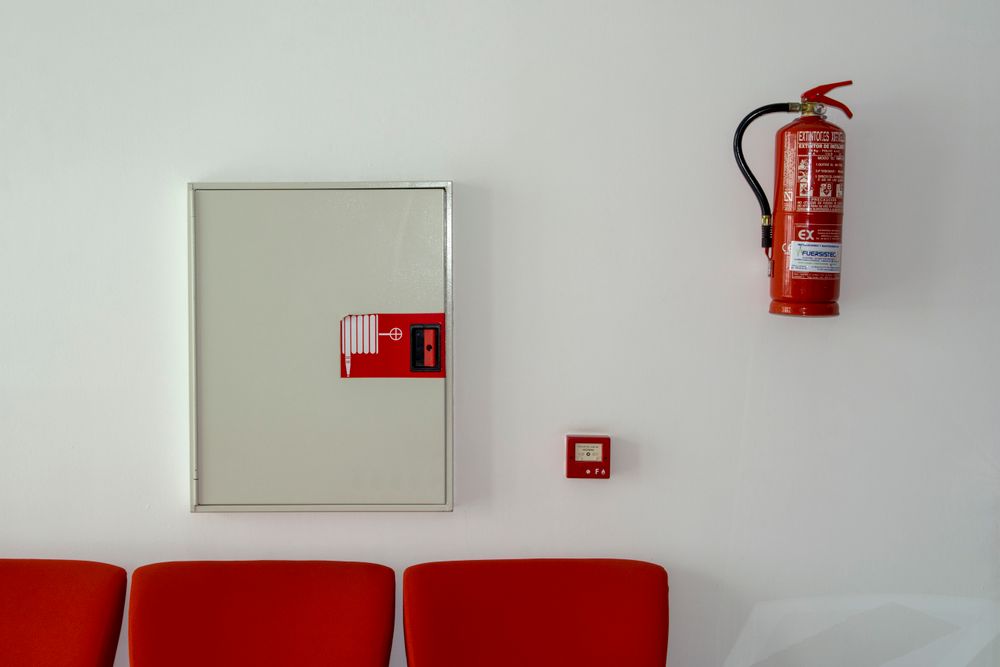
- Grabbing the nearest extinguisher. Read the label and colour band before you act. Extinguishers in the UK are red with a coloured panel that tells you what they are for.
- Ignoring the gas or power supply. For class C and electrical fires, isolating the source matters more than the extinguisher.
- Tackling a fire that is too big. Extinguishers are for small, early-stage fires only. If it has taken hold, evacuate.
- Untrained staff. People who have never been shown how an extinguisher works rarely use one effectively under stress.
Key takeaways
- Class A: solids (wood, paper) — water or foam.
- Class B: flammable liquids — foam, CO2 or powder, never water.
- Class C: flammable gases — isolate the supply first; powder is rated for it.
- Class D: metals — specialist class D powder only.
- Electrical: CO2; isolate the power.
- Class F: cooking oils and fats — wet chemical or a fire blanket.
Matching the class to the extinguisher is exactly the kind of knowledge that turns a panicked moment into a safe one. Our £23 Fire Safety course covers the classes and the right response in plain English, and pairs neatly with our practical guide on how to use a fire extinguisher. To understand how these risks should be documented, see our walkthrough of the fire risk assessment.