
Manual Handling on Construction Sites
Construction workers may move boards, blocks, tools and bags across uneven ground or between levels before the installation work even begins. Repeated carrying and awkward positioning can cause injury even when no single item seems exceptional. HSE advises construction employers to assess, control and review these risks as the site and work change.
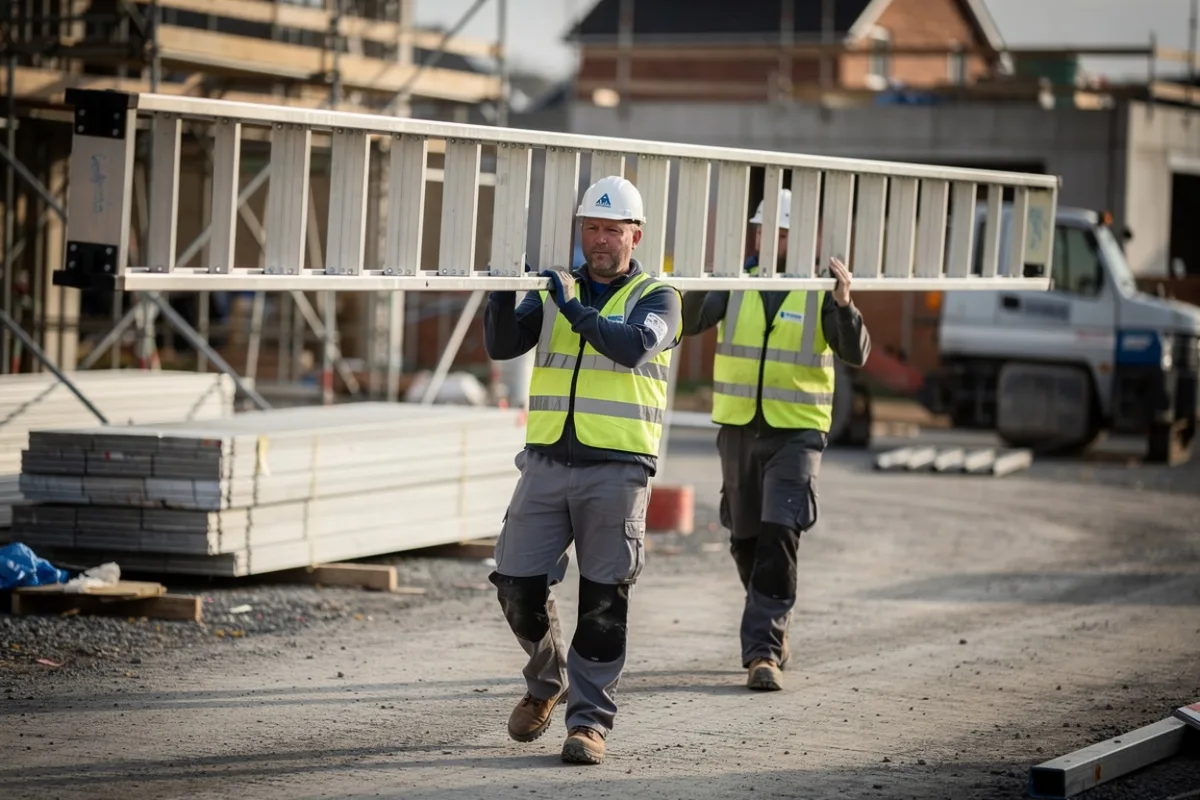
Plan handling before materials arrive
Ask the supplier how products will be packaged and delivered. Can materials arrive in smaller units, with lifting points, or nearer the place of use? Can a mechanical aid place a pallet at the correct level? A delivery left at the gate can create hundreds of avoidable metres of carrying. Plan access and unloading with the site layout and other trades in mind.
Where manual movement remains necessary, estimate the load, frequency, reach, carry distance and number of people involved. Include the awkward ends of the task: lifting from a vehicle, moving through a doorway and setting down at floor level. The Manual Handling Regulations require employers to avoid hazardous operations where reasonably practicable, then assess and reduce remaining risk.
Deal with the changing environment
Ground conditions, weather and access routes change quickly on a site. A safe trolley route on Monday may be obstructed by a skip on Tuesday. Mud, loose material, steps, poor lighting and wind can all affect control of a load. Review the method when conditions change and keep routes maintained. Do not expect workers to compensate for an unsuitable route by lifting more carefully.
Storage matters too. Place heavy or frequently used materials where they can be accessed without repeated bending or overhead reach. Keep products stable and protected so packaging does not fail when lifted. Coordinate deliveries so materials are not moved several times unnecessarily.
Use aids and team handling thoughtfully
Hoists, telehandlers, material lifts, dollies and suitable trolleys can remove difficult manual work, provided they are selected and operated under the relevant site arrangements. Check that an aid reaches the destination and fits the route. A team lift is not an automatic fix: workers need enough room, agreed commands and a shared plan for turns and setting down. If coordination is uncertain, choose another method.
Do not use a supposed legal lifting limit as the decision rule. HSE says there is no specific maximum weight in the Manual Handling Regulations. Risk depends on the task, load, environment and worker. A large light board in wind may be harder to control than a smaller heavy item on a short, level route.
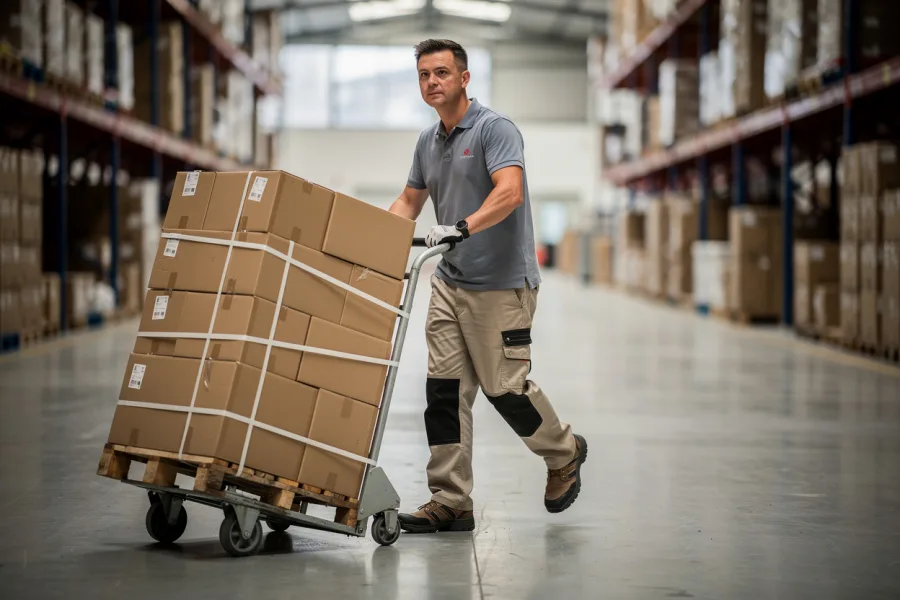
Make assessments useful on site
Identify high-risk jobs during planning and brief crews before the task. HSE’s MAC tool may help prioritise lifting, carrying and team handling operations, but it may not capture every site issue. Ask those doing the work what causes strain. Revise the assessment when the phase, materials, plant or access changes. Assign responsibility for ensuring the aid and route are ready, rather than leaving the control as a vague instruction.
Train for decisions, then for the actual job
Workers need to recognise when to stop, use the right aid, ask for help and report an unsafe route. General training introduces those principles. Site-specific instruction shows where materials go, what equipment is available and how the current task is organised. HSE recommends practical work in training so unsafe handling can be corrected where appropriate.
Our online manual handling course can support the general learning. Use it with site planning, task assessment and local instruction to reduce handling exposure as the job progresses.
Example: boards to an upper floor
A stack of boards delivered at ground level creates repeated handling when installation is upstairs. Plan whether a material hoist or other suitable mechanical method can move them close to the work. Check access dimensions, landing space and movement after unloading. If carrying remains, assess size, grip, route, wind and coordination. Long boards can be hard to control even when their weight seems modest.
The plan should identify who checks the route before delivery, who operates equipment and how boards will be stored securely. If another trade blocks access, stop and revise the method. Do not turn a planned mechanical movement into a rushed hand carry to keep a delivery on schedule.
Does manual handling training make a heavy material safe to carry? It helps workers recognise risk but cannot replace an aid or better delivery plan. Can an assessment be reused across projects? A previous one can inform the new assessment, but access, ground, materials and workers differ. Recheck the actual operation on this site and at this stage. Short daily coordination can catch a changed route before workers begin carrying.
Manual Handling training online
Self-paced online course with an assessment and a downloadable certificate.
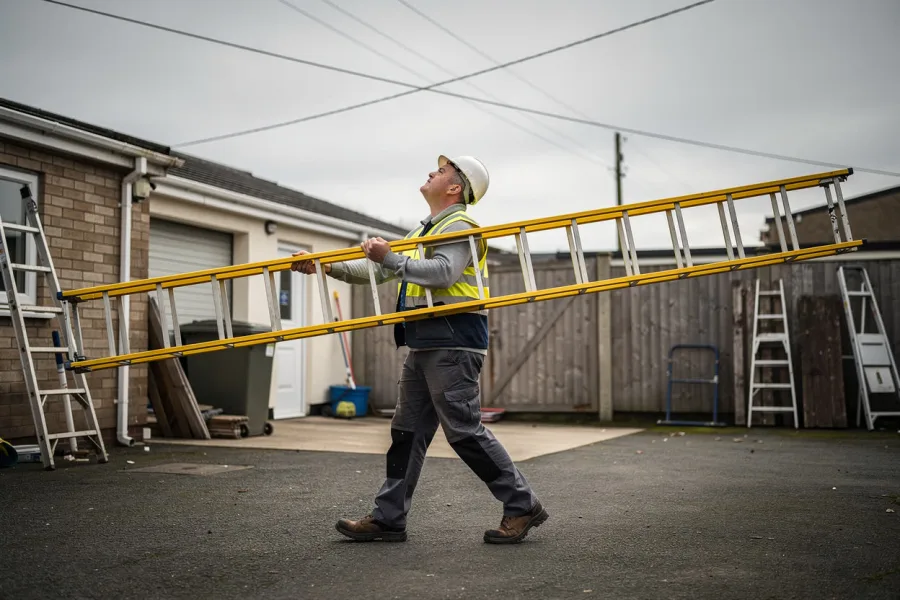
Coordinate across trades
Include handling arrangements in delivery and work planning, especially when more than one contractor needs the same access. Confirm that a lifting aid will be available at the time materials arrive. Keep a clear place for setting down loads and agree who will remove obstructions before carrying begins.