
Manual Handling in Retail: Stockroom to Shop Floor
Retail manual handling happens during deliveries, shelf replenishment, merchandising, customer assistance and waste removal. A load might move from a vehicle to a stockroom, then to a shelf, then again during a display change. Each movement adds exposure. A good retail plan reduces those extra moves and makes the remaining ones safer.
Assess the whole stock journey
Follow products from the loading point to the final shelf. Note where staff bend into a cage, reach over stock, carry items through customer areas or manoeuvre a trolley around tight corners. Include peak periods and promotional resets, when people may rush or work in unfamiliar layouts. Ask staff which products and times of day cause the most strain.
Assess the task, the individual, the load and the environment. A bulky light display may block vision; a small case of bottles may be dense and difficult to grip. Frequency matters: repetitive small lifts can be demanding. The Manual Handling Regulations set no universal safe weight limit.
Make deliveries easier to handle
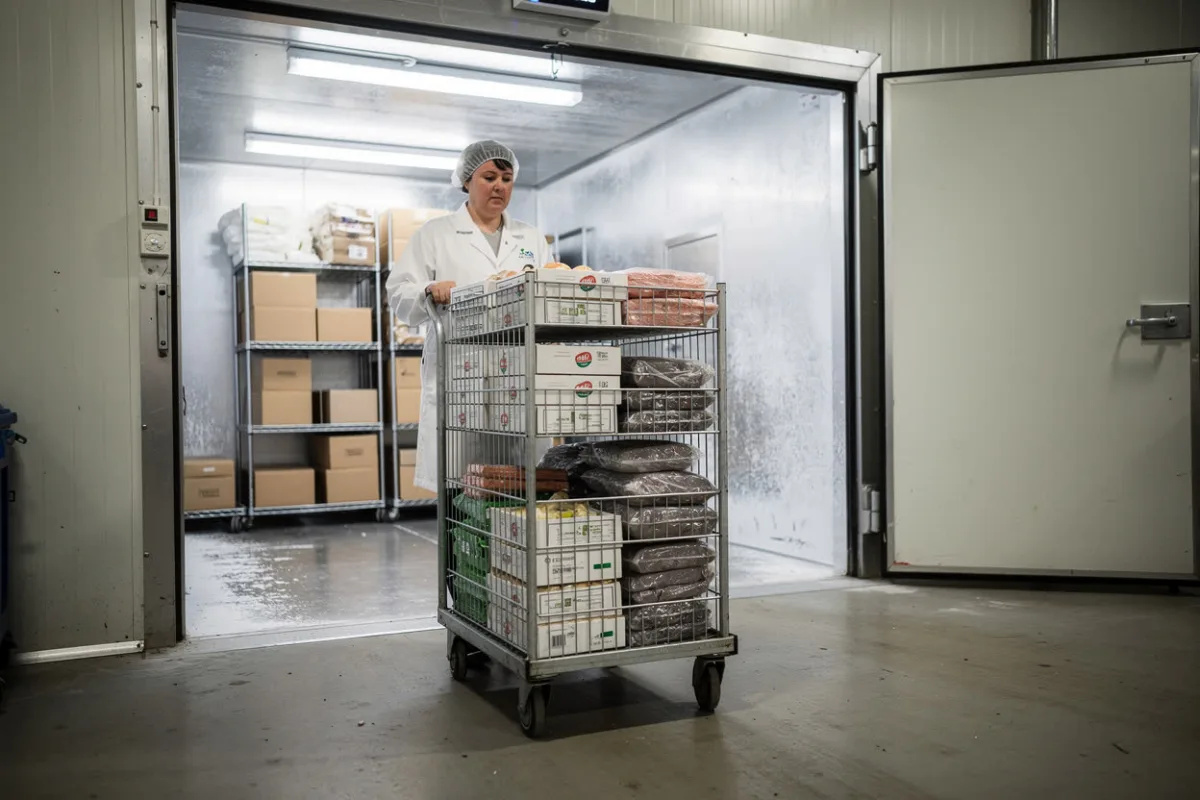
Agree a practical receiving area and avoid leaving heavy goods far from storage. Use appropriate pallet trucks, platform trolleys or other aids where the route allows them. Consider pack size and whether suppliers can add usable handholds. When loading cages, avoid putting the heaviest or most frequently picked goods where staff must make repeated low or high lifts.
Roll cages can create their own risks if overfilled, poorly maintained or pushed over uneven thresholds. Check wheels and brakes, maintain a clear view and keep routes free of obstructions. For more demanding pushing and pulling, HSE’s RAPP tool can help assess the operation. Do not assume that adding a second person solves a cage with defective wheels.
Arrange shelves and displays sensibly
Place heavier, frequently replenished items where staff can handle them without repeated floor-level or overhead lifts, as far as the store layout allows. Use suitable access equipment for high shelves; do not climb shelving or stretch with a load. Plan display changes so furniture and stock can be moved with a clear route and the right aid.
Where customers share the route, schedule large stock moves for quieter periods or manage access so staff are not forced to twist suddenly around people. Good housekeeping supports both manual handling and slip prevention. If a planned route becomes blocked, pause and change the method.
Train the team and check the controls
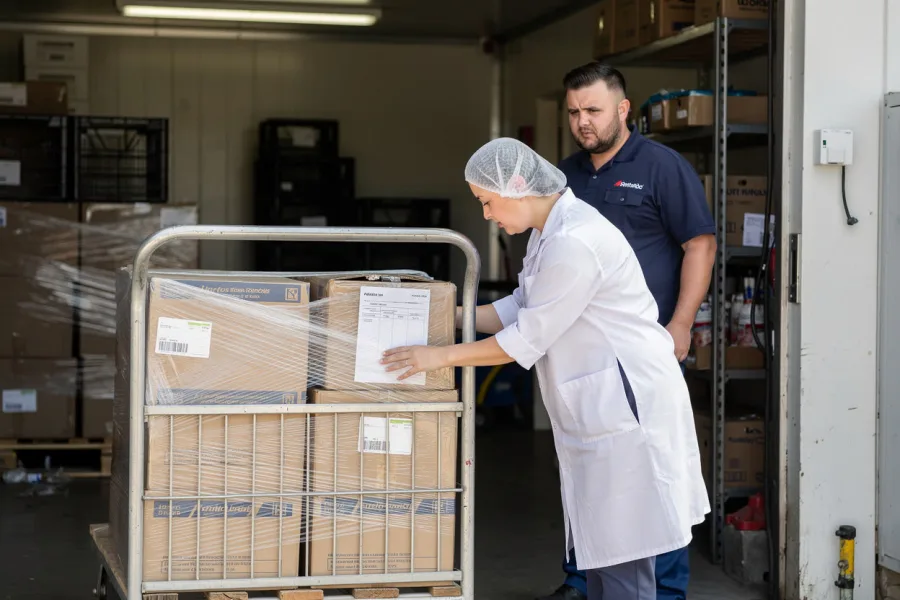
Provide a general understanding of manual handling risks, then explain your store’s loads, aids, routes and rules for asking for help. Temporary and part-time staff need the same local information as permanent staff. Supervisors should watch how stock is actually moved and address reasons staff bypass an aid, such as a missing trolley or no room to park it.
Training alone will not remove risks caused by poor layout or unmanageable packaging. The employer must avoid hazardous operations where reasonably practicable, assess unavoidable risk and reduce it. Review the assessment when products, shelves or the delivery pattern change, or when staff report pain or near misses.
Keep the solution practical
Choose a few changes that remove the greatest exposure, assign someone to implement them, and check the result during a normal shift. Workers are more likely to follow a method that fits the pace and space of the store. Keep the risk assessment and training record current so the next manager understands why those controls exist.
Our online manual handling course introduces the core principles for retail staff. Add a stockroom and shop-floor briefing that reflects your store’s actual work.
Example: a promotional changeover
A seasonal display can require several staff to move stock, shelving and signs after closing. Before starting, list awkward items, agree where they will go and provide suitable aids. Clear a route that does not pass through piled packaging. Place difficult items at accessible heights and avoid repeated double handling. A planned sequence reduces strain and the temptation to rush late in a shift.
After the change, observe replenishment. A new display may look attractive but require staff to lift heavy goods above shoulder height every day. Redesign that shelf before it becomes a routine exposure. Ask part-time staff whether the arrangement works during busy trading, not only during set-up.
Can a worker stop a lift that feels unsafe? Staff should pause and raise the concern through the store procedure so a safer method can be found. Does the weight label settle the assessment? No; bulk, grip, repetition and route matter too. Can training replace a trolley? No. If an aid is the chosen control, it must be available, maintained and usable in the real store layout.
Manual Handling training online
Self-paced online course with an assessment and a downloadable certificate.
Make reporting easy
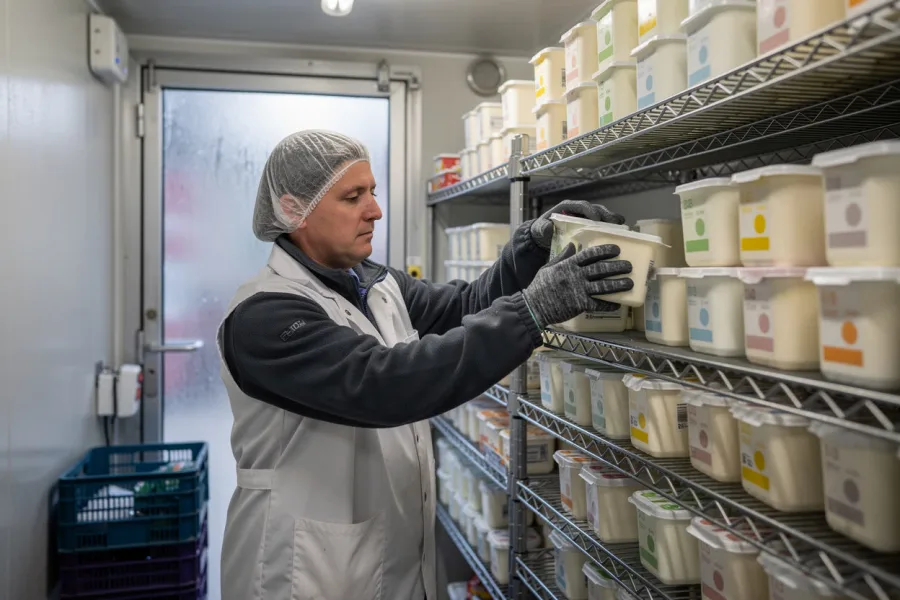
Encourage staff to report awkward stock, defective cage wheels and blocked routes before an injury occurs. Give a supervisor responsibility for acting on those reports and telling the team what changed. A small change to shelf position or delivery timing can remove repeated exposure across many shifts.