How to Carry Out a Manual Handling Risk Assessment, Step by Step
A manual handling risk assessment sounds bureaucratic, but at its core it is just a structured way of asking: "Could this lift hurt someone, and what can we do about it?" Done well, it takes minutes and prevents injuries that can sideline a worker for weeks.
When is a risk assessment required?
Under the Manual Handling Operations Regulations 1992, an employer must assess any hazardous handling task that cannot reasonably be avoided. The first duty is always to avoid the lift altogether where practicable; only when that is not possible does the assessment come into play. For the legal background, our explainer on the Manual Handling Operations Regulations 1992 sets out the avoid–assess–reduce hierarchy in full.
In practice, you should assess a task if it involves heavy, bulky or awkward loads, repetitive lifting, twisting or stooping, long carrying distances, or any handling that has already caused complaints of strain or discomfort. If in doubt, assess — it is quicker than dealing with an injury.
The step-by-step process
Step 1 — Identify the hazardous tasks
Walk the workplace and list every handling activity that could realistically cause harm. Talk to the people who actually do the work; they usually know which jobs leave them aching at the end of a shift.
Step 2 — Assess each task using TILE
For each task, work systematically through the four factors that determine handling risk. The simplest framework for this is TILE — Task, Individual, Load and Environment — which gives you a checklist so nothing is missed. We cover it in depth in our guide to the TILE method, but the essentials are below.
- Task — does it involve twisting, stooping, reaching, long carries or repetition?
- Individual — does it demand unusual strength, or pose a risk to someone who is pregnant, young or recovering from injury?
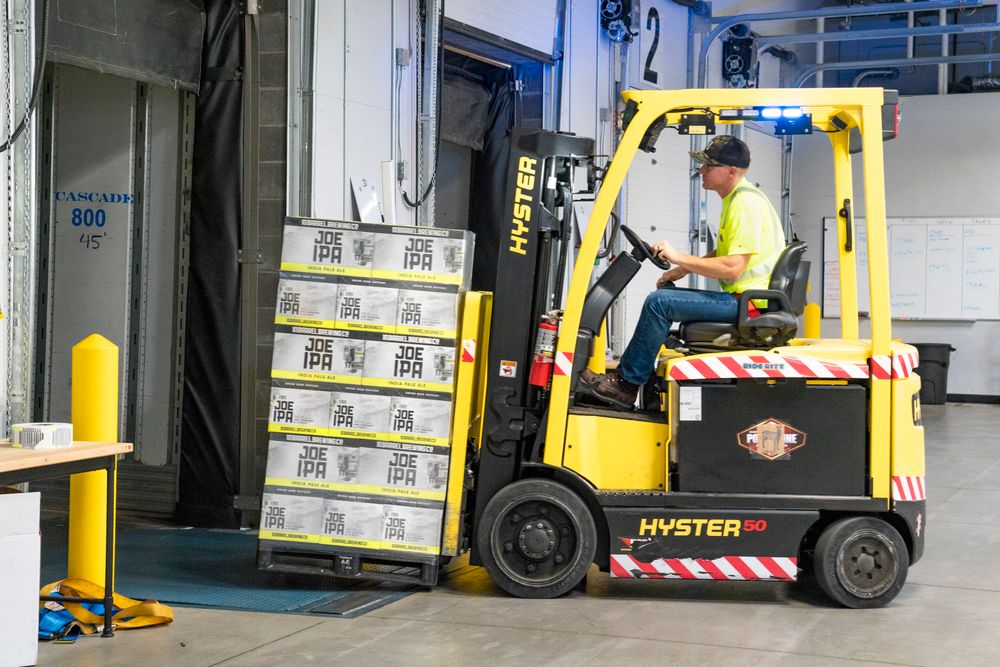
- Load — is it heavy, bulky, unstable, sharp or hard to grip?
- Environment — are there slippery or uneven floors, restricted space, poor lighting or extremes of temperature?
Step 3 — Decide what controls to put in place
For every risk you find, identify a way to reduce it: a trolley or hoist, a team lift, a lighter load broken into parts, a tidier route, better lighting, or job rotation to spread the strain. Training is a control in its own right — staff who understand safe technique are far less likely to be hurt.
A risk assessment is only worth the paper it is written on if it changes how the work is actually done. The point is action, not paperwork.
Key takeaways
- Assess any hazardous handling that cannot reasonably be avoided.
- Use TILE — Task, Individual, Load, Environment — as your checklist.
- Turn every identified risk into a practical control measure.
- Record your significant findings and share them with the people doing the work.
- Review the assessment when the task, load, people or environment change.
Train in Manual Handling — the right way
Self-paced, HSE-aligned, certificate issued the same day — from £23 per person.
Recording your findings
The HSE notes that you should record the significant findings of any assessment where it is practical to do so. A written record does not need to be elaborate — a simple form noting the task, the risks identified, the controls in place and who is responsible is plenty. What matters is that it is clear, honest and acted upon. A tidy record also gives you evidence of compliance should an inspector, insurer or client ever ask.
Keep the language plain and make sure the people doing the work can read and understand it. An assessment locked in a filing cabinet protects no one.
When to review the assessment
A risk assessment is not a one-off exercise. You should review it whenever something material changes, including:
- A new task, product line or piece of equipment is introduced;
- The weight, size or shape of the loads changes;
- The workplace layout, flooring or storage is altered;
- A handling injury or near miss occurs;
- New or vulnerable workers — such as those who are pregnant or returning from injury — take on the task.
Even without a specific trigger, it is good practice to revisit assessments periodically to make sure they still reflect reality.
Make assessment second nature
The best way to keep risk assessments quick and accurate is to make sure your team already thinks in terms of task, individual, load and environment. That is exactly what good training instils. Our online manual handling course teaches the TILE approach and safe technique together, costs just £23 per person and issues a certificate the same day you pass. Enrol your team and turn risk assessment from a chore into a habit.