Starting a Food Business: Hygiene Checklist
Starting a catering business involves more than choosing a menu and a premises. Before the first sale, you need a way to make safe food consistently, give accurate allergen information and show the local authority how the operation is managed. The details depend on what you produce and where you trade, but a few early decisions make later inspection and day-to-day service much easier.
Register the food business
Register with the local authority at least 28 days before trading or starting food operations. The requirement applies to many types of food business, including those run from home or online. Registration is about the establishment where the activity happens; it is separate from registering a company or dealing with tax. Some businesses handling products of animal origin for supply to other businesses may need approval rather than ordinary registration, so check with the council early if your model includes wholesale supply.
Use the FSA’s food business registration service where available. Describe the planned activities accurately. If you later add a new kitchen, mobile unit or production method, contact the authority about what details must be updated.
Design the workflow for safe food
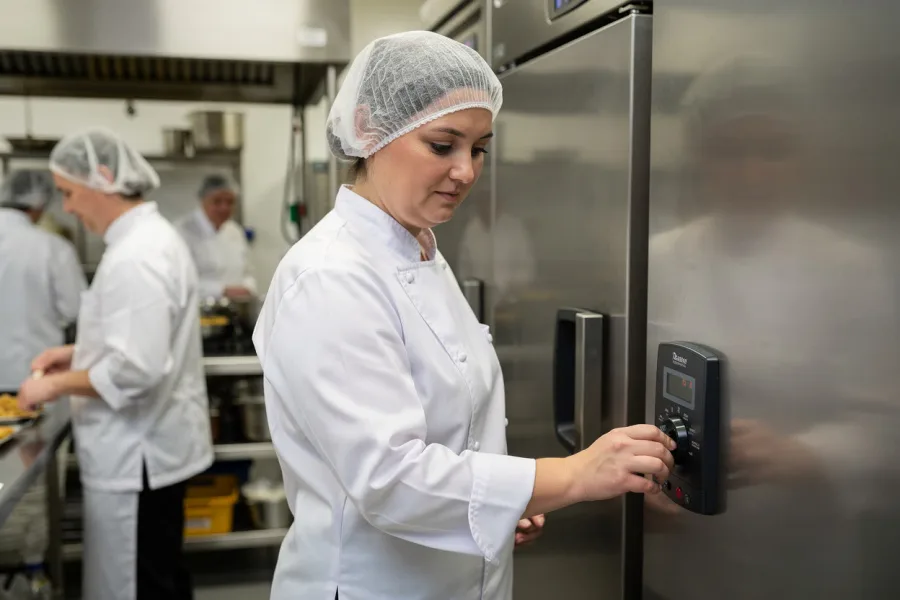
Map a dish from delivery through storage, preparation, cooking, cooling, transport and service. Decide where raw ingredients will be kept away from ready-to-eat food, where staff will wash hands and how equipment will be cleaned. Make sure refrigeration can hold the expected volume safely, especially during a busy service or a hot delivery day. A small home kitchen can still need careful separation and scheduling.
Choose suppliers who can provide reliable specifications and traceability. Plan how to check deliveries, including packaging, date marks and temperatures where relevant. Decide what happens when a delivery is unacceptable. A clear reject-and-record procedure is easier to use than an improvised decision when the driver is waiting.
Put food safety management in writing
Food businesses need procedures based on HACCP principles. For many small caterers in England and Wales, the FSA’s Safer Food, Better Business pack offers a practical framework. Northern Ireland businesses can use the FSA’s Safe Catering guidance. Complete the methods relevant to your operation, use the diary, and record any problem and corrective action. A downloaded pack left blank does not show how your business controls its own hazards.
Include cleaning, pest prevention, maintenance and temperature checks. If you change a recipe, equipment or preparation method, review the procedures. Supervisors should know who checks each control and what happens if it fails. Our HACCP Level 3 course can help those who manage a food safety system understand that responsibility.
Get allergen information right
Build ingredient and allergen records from current supplier information and your actual recipes. Teach staff where to find the answer to a customer’s question and never to guess. If you pack food on site before customers choose it, check whether the prepacked for direct sale rules require the food name, full ingredients and emphasised allergens on the package. An ingredient substitution must trigger a review before the product goes on sale.
Train the people who will serve customers
Food handlers need supervision and instruction and/or training appropriate to their tasks; a specific certificate is not universally required by law. A structured Food Hygiene for Catering Level 2 course can support cooks and other hands-on handlers. Then teach them the actual kitchen layout, safe methods, limits and escalation routes. Record the induction and watch new staff use the procedures in practice.
Prepare for the first inspection
The local authority may inspect after you start trading. Keep the premises clean and maintained, with handwash supplies, working refrigeration, accurate records and current allergen information. Be ready to explain how you control your biggest risks. The inspector will look at food handling, the condition of the premises and food safety management. In England, Wales and Northern Ireland, many businesses serving consumers will receive a Food Hygiene Rating Scheme score after inspection; Scotland uses a different scheme.
Review the FSA’s start-up checklist and getting-started guidance. Ask your council about any local requirements tied to your particular activity. The best opening plan is one the team can still follow on its busiest day.
HACCP Level 3 training online
Self-paced online course with an assessment and a downloadable certificate.
Plan for the first month, not only opening day
Before launch, decide who will review the first weeks of records and complaints. New businesses often discover that the actual volume of food is higher than the refrigerator space or that a delivery arrives while the only trained cook is away. A short weekly review can reveal those pressures early. Keep contact details for suppliers and the local authority accessible. If a batch must be withdrawn or an allergen mistake is suspected, staff should know who makes the decision and how affected customers or products can be identified.
Build enough time into the rota for cleaning, temperature checks and handovers. These are operating tasks, not optional extras once the kitchen becomes busy.
Keep early plans proportionate, but do not leave ownership vague. Name the person who approves labels, checks the daily diary, trains new starters and contacts the council. If the owner does every task, write down who covers those decisions during absence.