The Hidden Cost of Poor Manual Handling to UK Businesses
A pulled back or a strained shoulder rarely looks like a balance-sheet problem — until you add up the absence, the cover, the claims and the rising premiums. For most UK employers, the true cost of poor manual handling is far larger than the modest price of preventing it.
Manual handling injuries are easy to underestimate because the damage is spread out. There is no single dramatic moment that lands on the accounts. Instead, the cost arrives in pieces — a sick note here, an agency shift there, a solicitor's letter months later — and by the time you tot it all up, a single avoidable injury has quietly cost a small business thousands of pounds.
Under the Manual Handling Operations Regulations 1992 (MHOR) and the broader Health and Safety at Work etc. Act 1974 (HSWA)UK employers must avoid hazardous manual handling where reasonably practicable, assess what cannot be avoided, and reduce the risk. The Health and Safety Executive (HSE) treats these as core legal duties. But beyond compliance, there is a hard commercial case for getting manual handling right, and it begins with absence.
Absence and sick pay
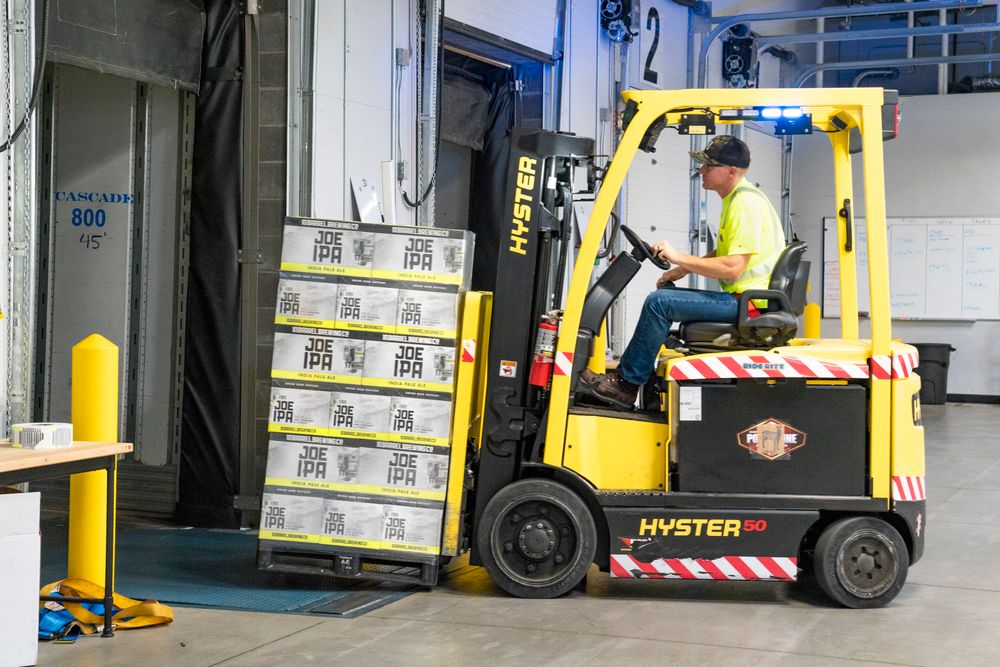
Musculoskeletal disorders — back, neck and upper-limb injuries — are among the leading causes of work-related ill health and lost working days in Britain. When a warehouse picker, a care worker or a delivery driver injures their back lifting a load, the immediate cost is their absence. You may still owe Statutory Sick Pay or contractual sick pay while they recover, and that money buys you no output at all.
Crucially, these injuries are rarely a clean break. Back strains tend to recur, flare up and linger, producing repeated short absences over months. Each one disrupts rotas and erodes goodwill long after the original lift.
Lost productivity
An injured worker who stays at work is not necessarily a productive one. "Presenteeism" — working through pain at reduced capacity — quietly slows everything down. Tasks take longer, mistakes creep in, and colleagues pick up the slack. Even before anyone goes off sick, poor handling technique drags on throughput across a whole team.
One injury is an incident. A pattern of strains across a team is a process failure — and it is the process, not the worker, that is costing you money.
Recruitment and cover
When someone is signed off, the work does not pause. You cover it — with overtime, with agency staff, or by stretching the team thinner. Agency rates carry a premium, overtime inflates your wage bill, and a tired team is more likely to suffer the next injury. If the absence becomes long-term and you need to recruit, advertising, interviewing and training a replacement adds a further layer of cost that never appears in any "accident" figure.
Civil claims and legal costs
Where an employer has failed to assess or control a handling risk, an injured employee may bring a personal injury claim. Defending or settling these claims is expensive, and the costs are not limited to compensation — there are legal fees, management time and the disruption of investigation. This is separate from any enforcement action by the HSE; we cover the penalties side in detail in our guide to manual handling fines and penalties.
Train in Manual Handling — the right way
Self-paced, HSE-aligned, certificate issued the same day — from £23 per person.
Higher insurance premiums
Employers' liability insurance is a legal requirement, and insurers price risk. A history of musculoskeletal claims marks you out as a higher risk, and premiums rise accordingly — not just for one year, but often for several renewals afterwards. A clean claims record, by contrast, is a quiet, compounding saving that good handling practice helps you keep.
Reputational damage
Few employers want a reputation as a place that wears people out. Word travels — through reviews, through staff turnover, through the local labour market. Larger clients increasingly audit their suppliers' health and safety arrangements before awarding contracts, and a poor record can quietly cost you work you never even hear about losing.
Key takeaways
- The cost of poor manual handling is spread across absence, sick pay, cover, claims, premiums and reputation — rarely a single visible line.
- MHOR 1992 and the HSWA 1974 require employers to avoid, assess and reduce handling risk.
- Musculoskeletal injuries tend to recur, multiplying their cost over time.
- Prevention — assessment plus competent training — is far cheaper than any one of these costs.
Why prevention is cheap by comparison
Set the figures side by side and the case makes itself. A single back injury can cost an employer thousands once absence, cover, a possible claim and a higher premium are counted. Training a worker in safe handling costs a fraction of that. Good practice starts with a sound manual handling risk assessment to design out the worst hazards, followed by competent training so every worker knows how to lift, carry and set down without putting their spine on the line.
Our online Manual Handling course is HSE-aligned, self-paced and just £23 per person, with the certificate issued the same day. Against the hidden costs above, that is one of the cheapest pieces of risk management a UK business can buy — and one of the few that pays for itself many times over.