Manual Handling Aids: Equipment That Cuts Injury Risk
The safest lift is often the one you never make yourself. From humble sack trucks to powered hoists, manual handling aids let equipment take the strain — and the right one can transform a risky job into a routine task. Here is how to choose well.
Why aids beat brute force
The Manual Handling Operations Regulations 1992 (MHOR 1992) set a clear order of priority: avoid hazardous handling where you can, and where you cannot, reduce the risk to the lowest level reasonably practicable. Mechanical aids sit at the heart of both. By transferring the load to wheels, leverage or power, they remove the human spine from the equation — and that is exactly where injuries begin.
Brute force, by contrast, relies on a worker's body holding up day after day. It does not. Repeated lifting, carrying and twisting wears people down and produces the strains and back injuries that dominate UK workplace ill-health figures. An aid that costs a modest sum can prevent injuries that cost far more in lost time, sick pay and claims.
Every load you put on wheels, slide or a hoist is a load your team no longer carries on their back. The cheapest aid is almost always cheaper than the injury it prevents.
The main types of manual handling aid
There is an aid for almost every handling problem. The trick is matching the tool to the task:
Wheeled aids
- Sack trucks — ideal for boxes, sacks and stacked goods over short distances; tip and roll rather than lift.
- Trolleys and cage trolleys — for multiple items or bulky loads; choose wheels suited to your floor.
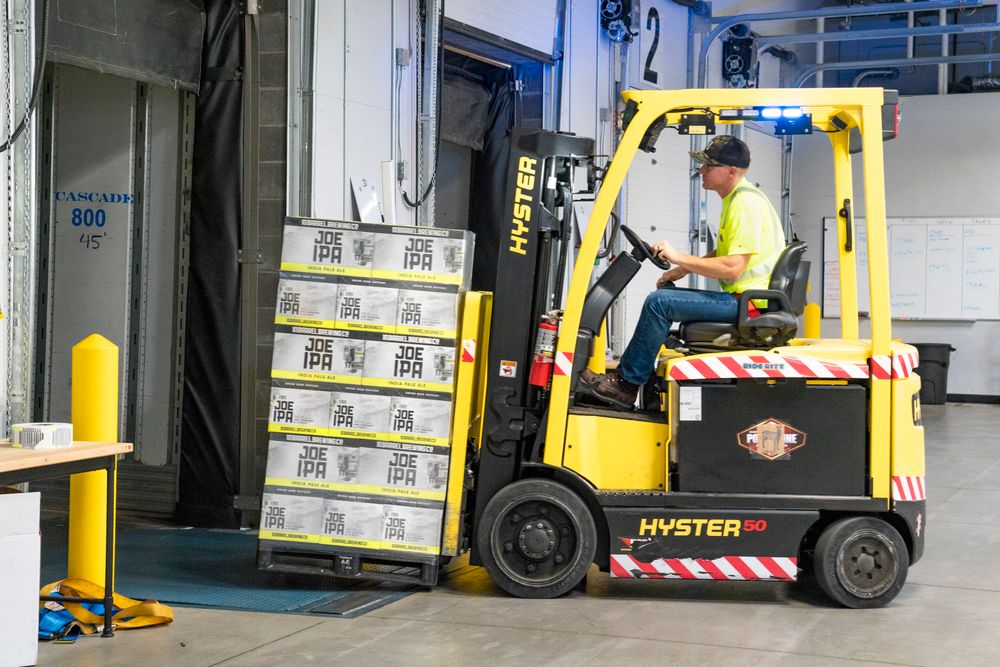
- Pallet trucks — manual or powered, for moving palletised goods around a warehouse.
- Conveyors — for repetitive movement of items along a fixed route, removing carrying altogether.
Lifting and positioning aids
- Hoists — for raising heavy or people-handling loads vertically without strain.
- Lifting tables — adjust the working height so loads can be handled at waist level, never from the floor.
- Slide sheets — reduce friction when moving a load (or person) across a surface, cutting the force needed.
- Suction lifters — grip smooth, flat items such as glass or slabs so they can be lifted safely and squarely.
Many of these reduce not just the weight handled but the awkward postures that cause injury. A lifting table, for instance, removes the deep bend that a floor-level lift demands — the very posture our guide to safe lifting technique warns against.
Train in Manual Handling — the right way
Self-paced, HSE-aligned, certificate issued the same day — from £23 per person.
How to choose the right aid
Buying equipment is not the end of the job — choosing the wrong aid, or using a good one badly, simply moves the risk around. Work through these questions before you invest:
- What is the task? Lifting, carrying, pushing or repositioning each points to a different aid.
- What is the load? Weight, shape, grip and fragility all matter — a suction lifter suits glass, not sacks.
- What is the environment? Floor surface, slopes, doorway widths and available space decide what will actually work on site.
- Who will use it? The aid must suit the people, and they must be trained to use it.
- Can it be maintained? A trolley with seized wheels or a hoist that is overdue inspection becomes a hazard in itself.
The choice should flow directly from your manual handling risk assessment, which identifies exactly which tasks place workers at risk and therefore where an aid will do the most good.
Aids only work with training
An aid is only as safe as the person operating it. A pallet truck used on a slope, a hoist with the wrong sling, or a slide sheet applied incorrectly can each create new dangers. That is why introducing equipment should always come with instruction — and why providing a new aid is one of the recognised triggers to refresh handling training.
Our £23 Manual Handling course teaches the principles that underpin safe use of every aid: assessing the task, protecting the spine, and knowing when equipment is the right answer. Train your team, equip them properly, and you tackle both halves of the MHOR duty at once.
Key takeaways
- Aids support the MHOR 1992 duty to avoid and reduce hazardous handling.
- Wheeled aids (sack trucks, trolleys, pallet trucks, conveyors) cut carrying and pushing strain.
- Lifting aids (hoists, lifting tables, slide sheets, suction lifters) remove awkward lifts.
- Choose by task, load, environment, user and maintainability — guided by your risk assessment.
- Aids only cut injury risk when paired with proper training.
The right equipment turns a back-breaking job into a safe, repeatable one. Combine it with our £23 Manual Handling course, and you give your team both the tools and the know-how to stay injury-free.