Manual Handling in Warehouses: Reduce the Risk
Warehouse handling risk is rarely about one dramatic lift. It often builds through repeated picking, awkward pallet positions, long carries and the pressure to keep goods moving. A warehouse can reduce injuries by changing layout and workflow before asking workers to rely on lifting technique. HSE’s warehousing guidance recommends involving employees, assessing higher-risk tasks and using handling aids where appropriate.
Follow the load from arrival to dispatch
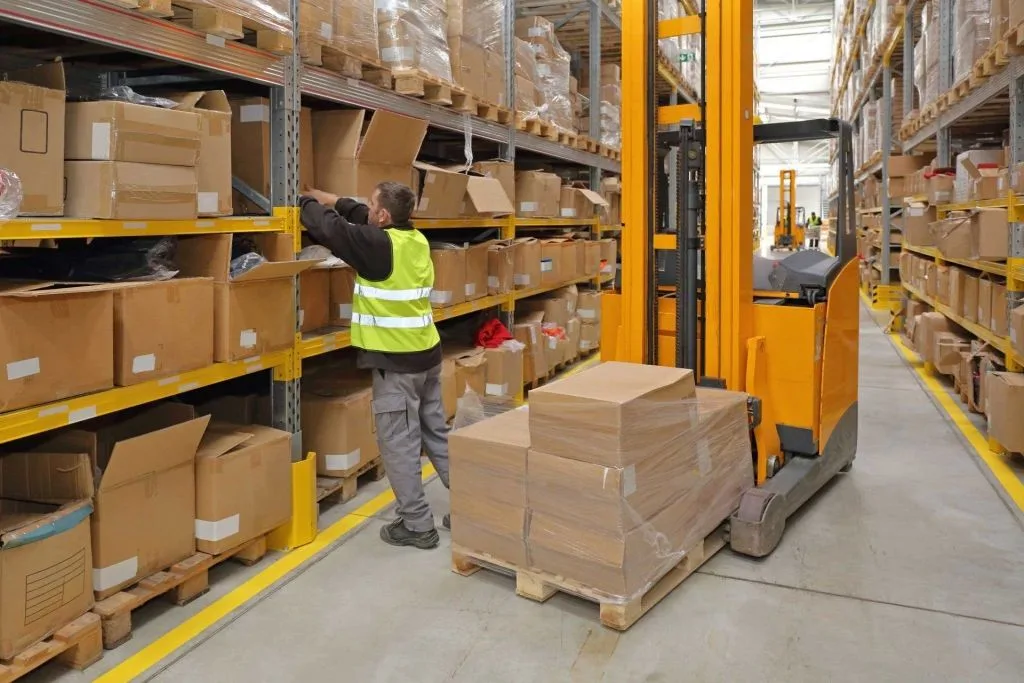
Map the real path of a product: unloading, checking, storing, picking, packing and loading. At each stage ask whether staff lift from floor level, reach above shoulder height, carry items farther than planned or work around vehicles. A task that looks manageable in isolation may be repeated across an entire shift. Ask pickers and loaders which products are hardest to handle and when the route becomes congested.
Consider seasonal changes. A new product range may bring larger boxes; peak demand may increase lifting frequency; temporary storage may block trolley routes. Reassess operations when those conditions change rather than relying on last year’s document.
Improve pallets and storage
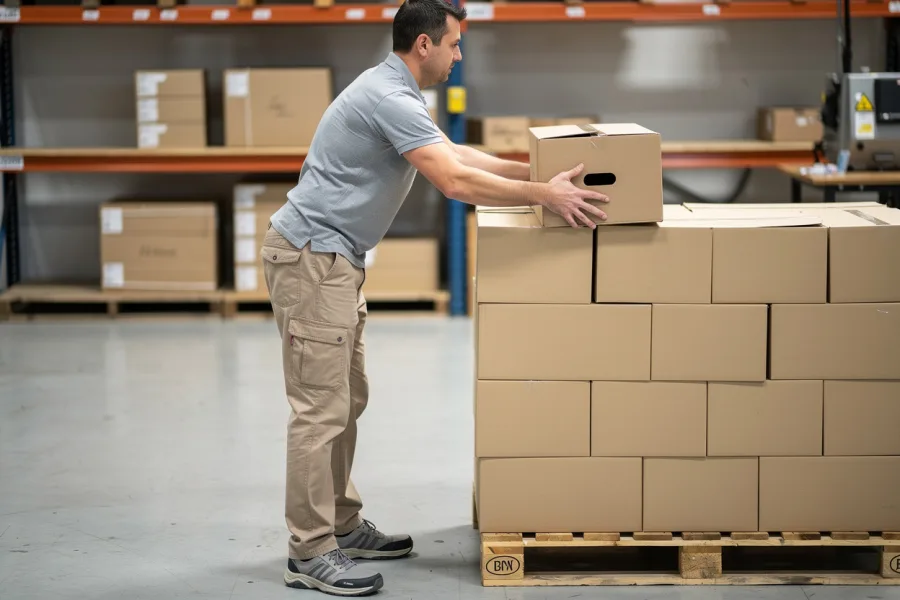
Avoid placing frequently picked heavy items at the bottom of a pallet or on high shelving if there is a safer arrangement. Where possible, bring stock to a comfortable working height or use a suitable lift table. Smaller packages, handles or a different pack design may reduce force and improve grip. If goods can be palletised and moved mechanically, avoid unnecessary manual carrying.
A worker should know the load’s weight where reasonably practicable, especially when boxes look identical but contents differ. The Manual Handling Regulations do not provide a universal safe weight limit. Consider the size, grip, stability and repetition as well as the number on a label.
Choose and maintain handling aids
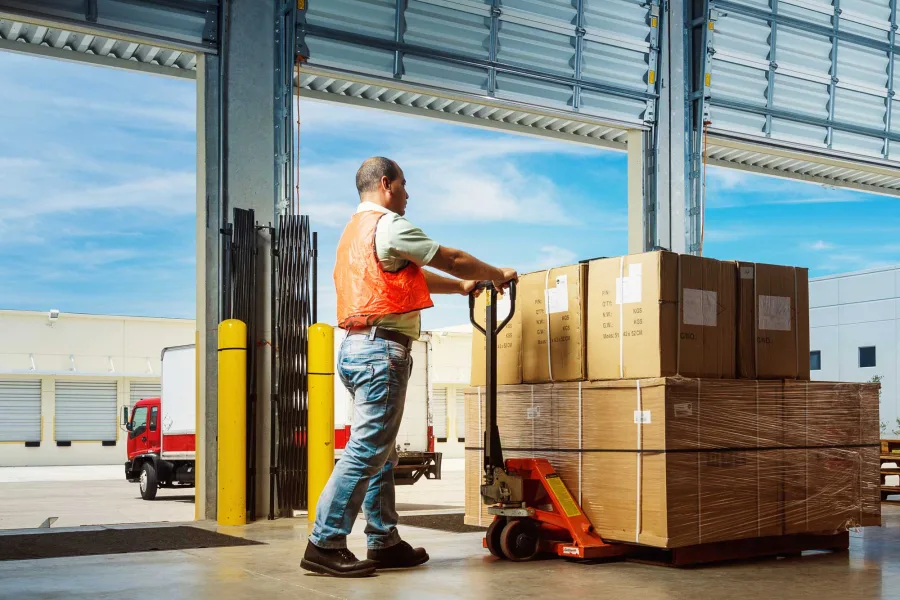
Pallet trucks, trolleys, roller conveyors and other aids can remove or shorten difficult carries. Select them for the load, route and floor. A trolley with small wheels may be hard to push over a threshold; a damaged pallet jack may create a new strain risk. Make sure workers can use the aid, inspect it and report defects. Keep pedestrian routes clear and plan the interaction with vehicles.
Roll cages deserve particular attention. Their height can block the view, and poor wheels or uneven floors can make starting and steering difficult. Do not substitute more force for a damaged cage or a blocked route. Assess pushing and pulling separately where needed, using HSE’s RAPP tool.
Assess the hardest tasks
Use HSE’s simple filters for genuinely low-risk handling, and consider the MAC tool for lifting, carrying and team handling tasks that need closer attention. Observe a full pallet cycle and the worst normal position, not just a waist-high sample. A MAC score can help prioritise changes, but a fuller assessment may be needed for individual capability, unusual loads or other conditions.
Training should explain the local system: which aid to use, where heavy stock belongs, when a team lift is appropriate and when to stop. HSE notes that training alone cannot make an unsafe operation safe. The equipment, layout and pace need to support the instructions.
Review what actually happens
Supervisors should watch normal shifts and invite reports of near misses and discomfort. If workers repeatedly bypass an aid, find out whether it is unavailable, too slow, broken or unsuited to the route. Adjust the control and check its effect. A procedure that exists only on paper will not protect a worker at the loading bay.
Our online manual handling course gives warehouse teams a grounding in risk factors and safer handling decisions. Add instruction on the loads, equipment and traffic arrangements at your site.
Example: redesign a picking aisle
Imagine pickers repeatedly taking cartons from a lowest shelf and carrying them to a packing bench. Before retraining, ask whether the product can be stored higher, the bench brought closer or a suitable trolley provided. Check that a changed shelf position does not create a high reach for another worker. Watch the whole pick cycle, including restocking, because an improvement for pickers can shift the difficult lift to replenishment staff.
The assessment should capture shift peaks, product variation and everyone who uses the aisle. If carton weights look alike, improve labels or storage rules. If the trolley causes congestion, change the layout or schedule rather than abandoning the aid. Test the arrangement with the people doing the job and review complaints afterwards.
Should every heavy item be a team lift? No. A suitable aid or revised delivery method may be safer, and team handling adds coordination demands. Is a back belt a substitute for assessment? No. Employers still have to avoid, assess and reduce the operation. Do experienced workers need instruction? Yes, when products, equipment or procedures change, or observation reveals a gap between the planned and actual method.
Manual Handling training online
Self-paced online course with an assessment and a downloadable certificate.
Keep workers involved
Invite pickers, loaders and replenishment staff to review proposed changes before making them permanent. Their different parts of the workflow can reveal a new reach, delay or obstruction. Record what they report after a trial and adjust the control if it has simply moved the risk elsewhere.