Manual Handling in Warehouses and Logistics
Warehousing and logistics run on movement — goods in, goods picked, goods packed, goods out. Behind the conveyors and forklifts, human hands still lift, carry and stack thousands of times a shift. That sheer volume is exactly what makes manual handling such a serious risk in the sector, and such a manageable one when it is taken seriously.
The volume problem
A single warehouse operative might handle hundreds of items in a shift, often the same movement over and over. No individual lift may be heavy, but the cumulative load on the body is enormous. This is why warehouse injuries are frequently wear-and-tear problems — gradually developing back, shoulder and wrist complaints — rather than dramatic one-off accidents, though those happen too.
UK employers must manage this under the Manual Handling Operations Regulations 1992 (MHOR) and the Health and Safety at Work etc. Act 1974: avoid hazardous handling where they can, assess what remains, and reduce the risk so far as is reasonably practicable. In a high-volume environment, that means designing the work itself to be kinder to the body.
Picking and packing
Order picking is the classic repetitive task. Reaching to low shelves and twisting to place items in a cage or trolley, dozens of times an hour, loads the spine and shoulders relentlessly. Packing adds repetitive wrist and grip strain as boxes are assembled, filled, taped and labelled.
The single most useful question in a warehouse is not "how heavy is it?" but "how many times will this movement be repeated today?" Frequency is where the real risk hides.
Practical controls include keeping the most-picked items in the easy-reach "golden zone" between knee and shoulder height, varying tasks so the same muscles are not used all shift, and setting packing benches at a height that keeps wrists neutral. Understanding the common manual handling injuries these tasks cause makes the case for these changes obvious.
Pallets and cages
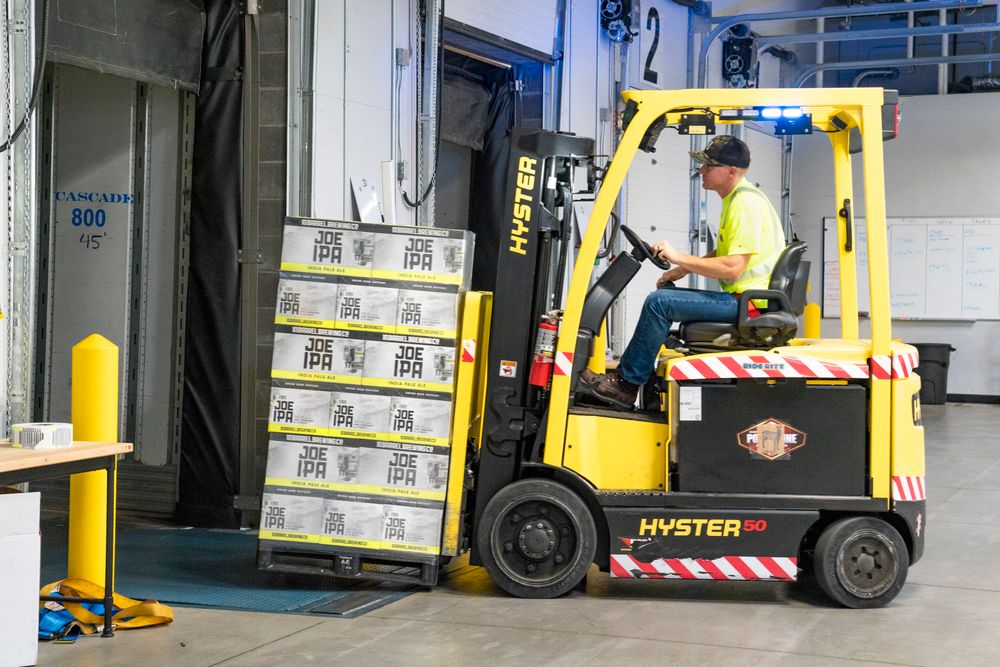
Loading and unloading pallets and roll cages brings its own hazards. Items at the bottom of a pallet sit near the floor — a poor lifting position — while those on top may be above shoulder height. Roll cages are heavy to push and pull, and can tip or trap fingers if handled carelessly on uneven floors or ramps.
- Build pallets thoughtfully: heavier items in the mid-zone, not the very bottom or top.
- Push rather than pull loaded cages, keeping them in front of you and moving slowly through doorways and over thresholds.
- Mind the floor: ramps, kerbs and debris turn a routine cage move into a trip or crush risk.
- Never overload a cage beyond its rated capacity or your ability to control it.
Train in Manual Handling — the right way
Self-paced, HSE-aligned, certificate issued the same day — from £23 per person.
Let machines do the heavy work
The first principle of MHOR is to avoid hazardous handling altogether, and a well-equipped warehouse does exactly that. Pallet trucks, sack barrows, scissor lifts, conveyors, vacuum lifters and powered tugs all remove load from the human body. The trick is making sure the right aid is available where and when it is needed — an unused lifter parked at the far end of the building helps no one. Choosing and maintaining the correct equipment is a skill in itself; our overview of manual handling aids and equipment covers what to look for.
Fatigue and shift design
Tired bodies get hurt. Concentration drops, technique slips, and the careful lift of hour one becomes the careless snatch of hour nine. Long shifts, night work and tight productivity targets all push people past the point where they handle loads safely.
Good employers treat fatigue as a handling control, not a soft extra. Sensible shift lengths, genuine rest breaks, task rotation so no one repeats the same movement endlessly, and realistic pick rates all keep workers fresh enough to lift well. Pressure to "just get it done" is one of the most reliable causes of injury in the sector.
Layout: designing risk out
Much warehouse handling risk is built into the floor plan before anyone lifts a thing. Cramped aisles force twisting, low or sky-high storage forces bad postures, and long carry distances multiply strain. Thoughtful layout — wide aisles, sensible storage heights, short travel routes, clear and level floors, and equipment stored near where it is used — quietly removes risk that would otherwise have to be managed person by person.
Key takeaways
- In warehousing, repetition and volume are the main risks — frequency matters more than the weight of any single item.
- Keep frequently picked items in the easy-reach golden zone and set packing benches to keep wrists neutral.
- Build pallets thoughtfully, push (don't pull) loaded cages, and respect rated capacities and floor conditions.
- Use mechanical aids to remove load from the body, and make sure they are available where the work happens.
- Manage fatigue through sensible shifts, breaks and task rotation, and design risk out through good warehouse layout.
Train the team that does the lifting
Equipment and layout do a lot, but the people on the floor still need to read a task, reach for the right aid and lift well when handling cannot be avoided. Our HSE-aligned Manual Handling course costs just £23 per persontakes around an hour at the learner's own pace, and issues a certificate the same day — with bulk discounts that make training a whole warehouse team straightforward and affordable.