Preventing Falls From Height: The Hierarchy of Control
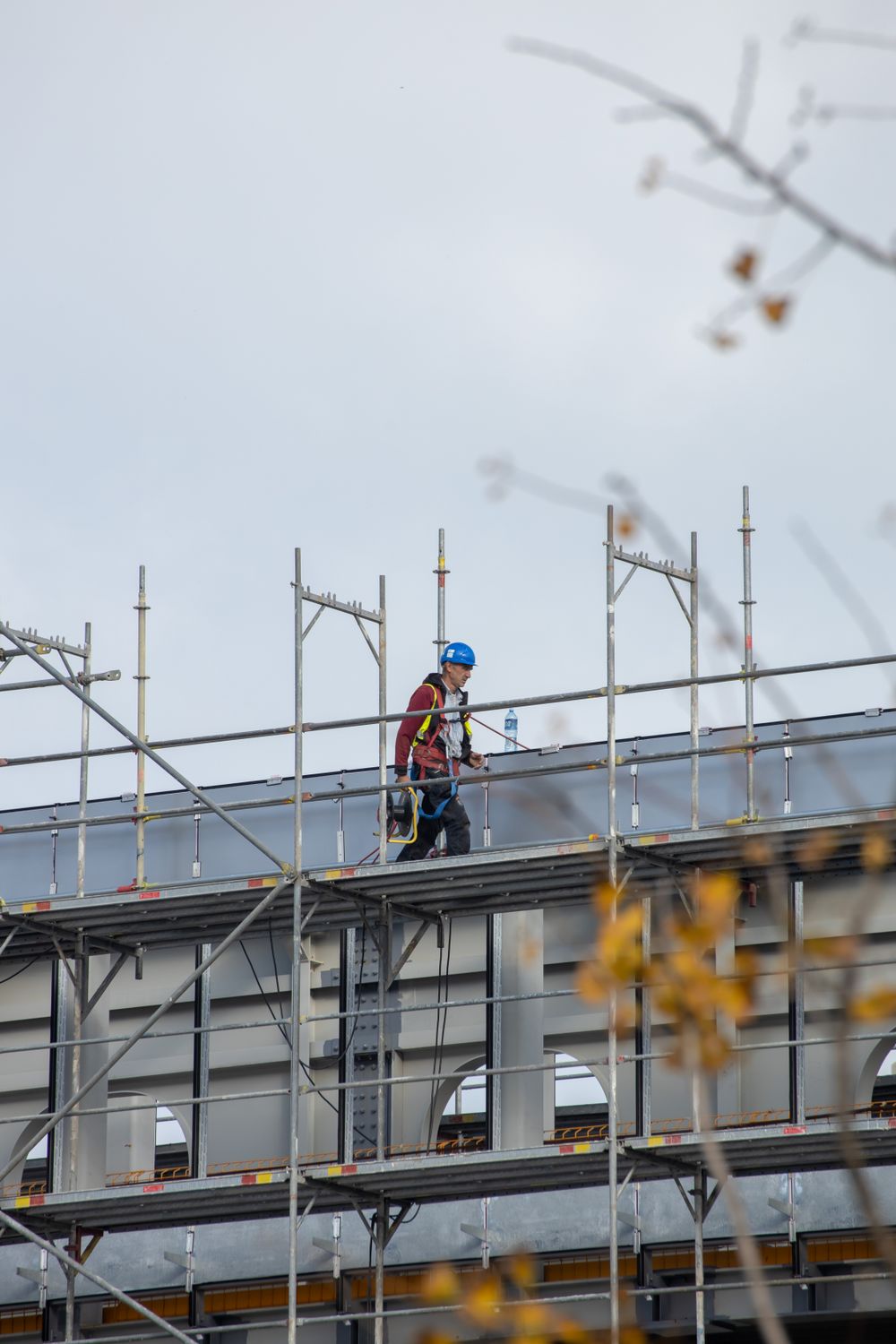
Falls from height are consistently among the leading causes of serious workplace injury in Britain. The good news is that they are also highly preventable — provided you apply controls in the right order and never treat a harness as the first line of defence.
Every approach to preventing falls comes back to one idea: the hierarchy of control. It is the structured order in which you should consider measures, starting with the option that removes risk entirely and working down only as far as you have to. The Work at Height Regulations 2005, sitting beneath the Health and Safety at Work etc. Act 1974, build this hierarchy into law. This article explains how it works in practice.
Collective versus personal protection
The most important distinction in fall prevention is between collective and personal protection, and the regulations consistently prefer the former.
- Collective protection protects everyone in the area without anyone needing to do anything. A guardrail around a roof edge protects every worker who comes near it, whether or not they have been briefed that morning.
- Personal protection protects only the individual using it, and only if they use it correctly. A harness depends on the right anchor, the right connection and the person actually clipping on.
Collective measures fail safe; personal measures fail to the person. That single sentence explains why the law puts guardrails ahead of harnesses every time.
This principle runs through our broader guide to working at heights, and it should shape every decision a planner makes.
The hierarchy, step by step
1. Avoid the work
The strongest control is not to work at height at all. Can the task be done from the ground using extending tools, or by assembling components below and lifting them into position? If so, no fall is possible.
2. Prevent a fall with collective measures
Where work at height is unavoidable, prevent falls using a safe existing place of work or collective equipment. Guardrails, edge protection, working platforms and properly assembled towers all stop people reaching the edge in the first place.
3. Prevent a fall with personal measures
If collective prevention is not reasonably practicable, personal fall-restraint systems can prevent a worker from reaching a position where they could fall — for example, a restraint lanyard set short enough that the edge cannot be reached.
4. Minimise the distance and consequences
Only when a fall cannot be prevented do you move to minimising it. This is where collective fall-mitigation such as safety nets and soft-landing airbags come in, followed by personal fall-arrest systems as a last resort.
Working at Heights training from £23
Self-paced, HSE-aligned, certificate the same day — £23 per person.
Equipment that fits the hierarchy
Different equipment sits at different rungs of the hierarchy, and choosing well is half the battle:
- Guardrails and edge protection — collective prevention, the preferred option wherever a fixed edge can be guarded.
- MEWPs (mobile elevating work platforms) — provide a guarded working platform that can be raised and lowered, combining access with prevention.
- Safety nets and airbags — collective minimisation, catching a person before they reach the ground and reducing injury.
- Personal fall-arrest systems — harness, lanyard, energy absorber and anchor, used only where higher controls are not reasonably practicable.
For a fuller comparison of these options and when each is appropriate, see our guide to choosing safe access equipment.
Training and rescue planning
No control works without competent people. Anyone planning, supervising or carrying out work at height must be trained for their role, and that training should cover not only how to use equipment but how to recognise when conditions have changed.
Why rescue planning matters
Fall-arrest equipment introduces a hazard that lower controls do not: a person can be left hanging in a harness after a fall. Suspension in a harness can become dangerous quickly, so a workable rescue plan must be in place before the work starts. A harness without a rescue plan is only half a solution.
- Decide in advance how a fallen worker will be recovered, and by whom.
- Make sure rescue equipment is on site and that someone competent can use it.
- Never rely solely on the emergency services to perform a height rescue.
Key takeaways
- Apply the hierarchy of control in order: avoid, then prevent, then minimise a fall.
- Always prefer collective protection, which fails safe, over personal protection, which depends on the individual.
- Match equipment to the right rung — guardrails and MEWPs prevent, nets and airbags minimise, fall arrest is a last resort.
- Train everyone involved and put a rescue plan in place before any fall-arrest work begins.
- A £23 Working at Heights course grounds the whole team in this hierarchy in a single sitting.
Preventing falls is rarely about a single piece of kit. It is about thinking through the hierarchy honestly, choosing collective protection wherever it is reasonably practicable, and planning for the moments when things do not go to plan. Get that order right and most falls simply never happen.