Scaffold, MEWP or Harness? Choosing Safe Access Equipment
Pick the wrong access equipment and even a careful worker is exposed to risk. The Work at Height Regulations 2005 do not name a single "best" option — instead they ask you to match the equipment to the task, the site and the people doing the job.
Choosing access equipment is one of the most consequential decisions in any work-at-height plan. The Work at Height Regulations 2005, underpinned by the Health and Safety at Work etc. Act 1974, require you to select equipment that is appropriate for the work and that gives preference to collective protection over personal protection. This guide compares the main options and the factors that should drive your choice.
The main options compared
Podium steps
A podium step is essentially a small, enclosed platform with a guardrail. It suits light, short-duration internal tasks at low level — changing fittings, decorating, basic maintenance. It is stable, quick to set up and far safer than a stepladder for the same job because it provides a guarded working position and lets you keep both hands free.
Mobile access towers
A tower is a free-standing scaffold, usually aluminium, that can be moved on castors. Towers give a guarded platform at greater height and are well suited to medium-duration work. The catch is assembly: towers must be erected by a competent person using a recognised method, and they must be inspected before use and at intervals.
Scaffolds
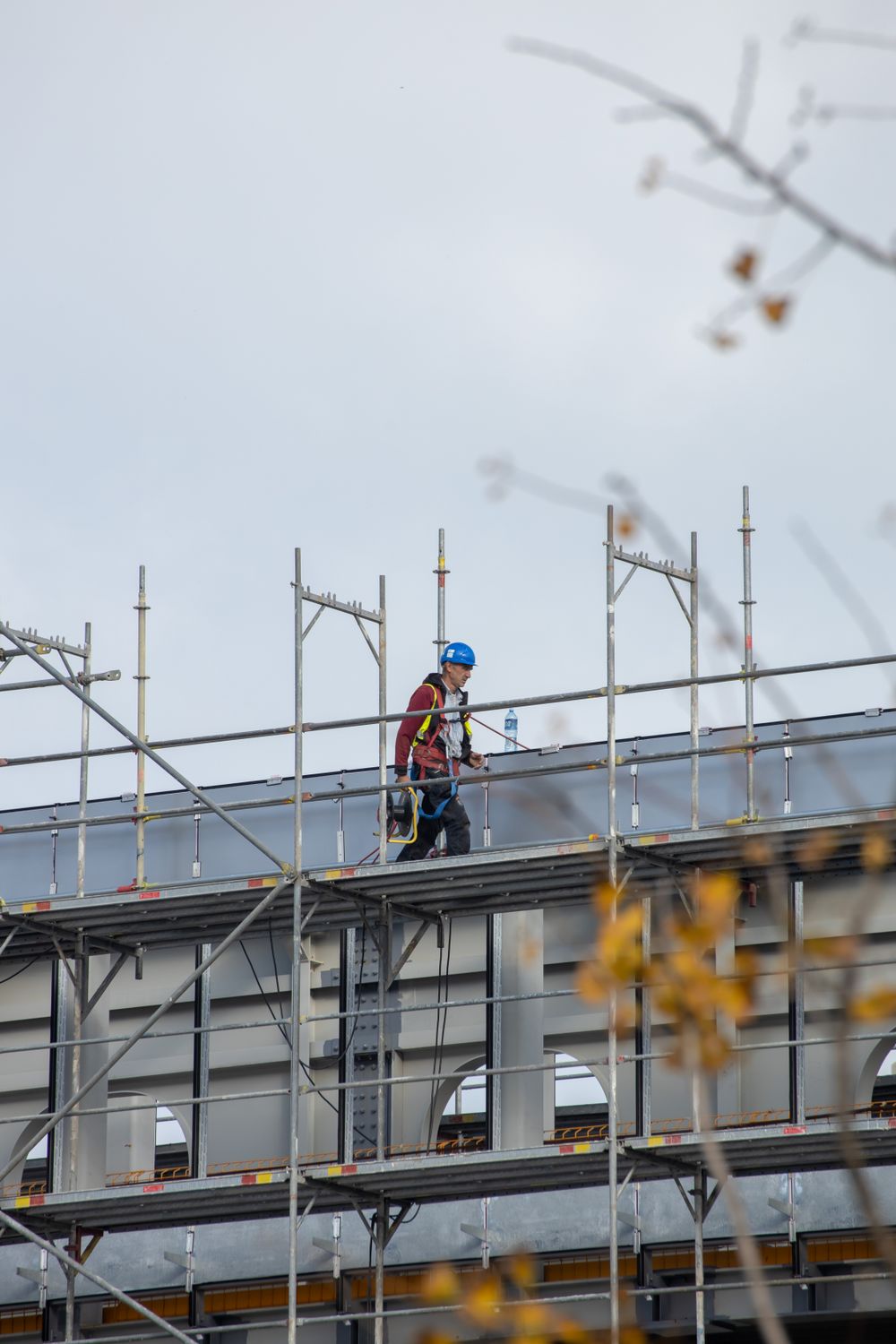
A traditional scaffold provides a robust guarded platform for long-duration, large-area work such as building maintenance and construction. Scaffolds must be designed, erected and altered only by competent people, inspected before first use and then regularly, with results recorded.
MEWPs
A mobile elevating work platform — a cherry picker or scissor lift — provides a powered, guarded platform that reaches positions other equipment cannot. MEWPs are excellent for variable-height work and quick repositioning, but operators must be trained for the specific machine, and the ground conditions must support it.
Rope access
Rope access uses ropes and harnesses to reach difficult positions, typically on tall structures. It is highly specialised, demands rigorous training and supervision, and should only be used where other methods are genuinely impractical.
Personal protective equipment
Fall-protection PPE — harnesses, lanyards, restraint and arrest systems — protects only the wearer and only when used correctly. Under the hierarchy it sits near the bottom and supports other measures rather than replacing them, a point we develop in our guide to preventing falls from height.
Working at Heights training from £23
Self-paced, HSE-aligned, certificate the same day — £23 per person.
The selection factors that matter
There is rarely one correct answer, but there is a consistent set of questions that points you to a sensible choice:
- Duration — minutes favour a podium step; hours or days favour a tower, scaffold or MEWP.
- Height and reach — fixed low-level work suits towers; variable or awkward positions suit MEWPs or rope access.
- The task itself — heavy loads, force or two-handed work rule out anything you would have to balance on.
- Ground and surroundings — uneven, soft or sloping ground limits towers and MEWPs and may force a redesign.
- Frequency — work that recurs may justify permanent collective protection such as fixed guardrails.
- The people — equipment is only as safe as the competence of those using it.
The right equipment is the one that lets the work be done from a guarded position, by trained people, for the time the job actually takes. Everything else is a compromise to be justified, not a default.
These same priorities run through our overview of the Work at Height Regulations 2005, which set the legal framework for every choice above.
Inspection and competence
Selecting good equipment is only the start. The regulations require that access equipment is inspected at suitable intervals and after any event that might have affected its safety. Scaffolds and towers carry specific inspection duties, with records kept; PPE must be examined before use and periodically by a competent person.
Competence ties it together. Whoever erects a tower, operates a MEWP, rigs a rope-access system or wears fall-protection PPE must be trained for that specific task and equipment. General awareness is not enough for specialist kit, but a solid grounding in the principles — which a short Working at Heights course provides — helps every worker understand why the equipment was chosen and how to use it safely.
Key takeaways
- No single piece of equipment is "best" — match it to the duration, height, task, ground and people.
- Favour guarded platforms (podiums, towers, scaffolds, MEWPs) over equipment you balance on or PPE alone.
- Specialist equipment such as towers, scaffolds, MEWPs and rope access demands specific competence.
- Inspect access equipment at suitable intervals and after anything that could affect its safety, keeping records where required.
- A £23 Working at Heights course gives the whole team the grounding to understand and use the equipment safely.
The honest test for any access decision is simple: does this equipment let the job be done from a safe, guarded position by people trained to use it? If the answer is yes, you have almost certainly chosen well — and the regulations will look after the rest.