
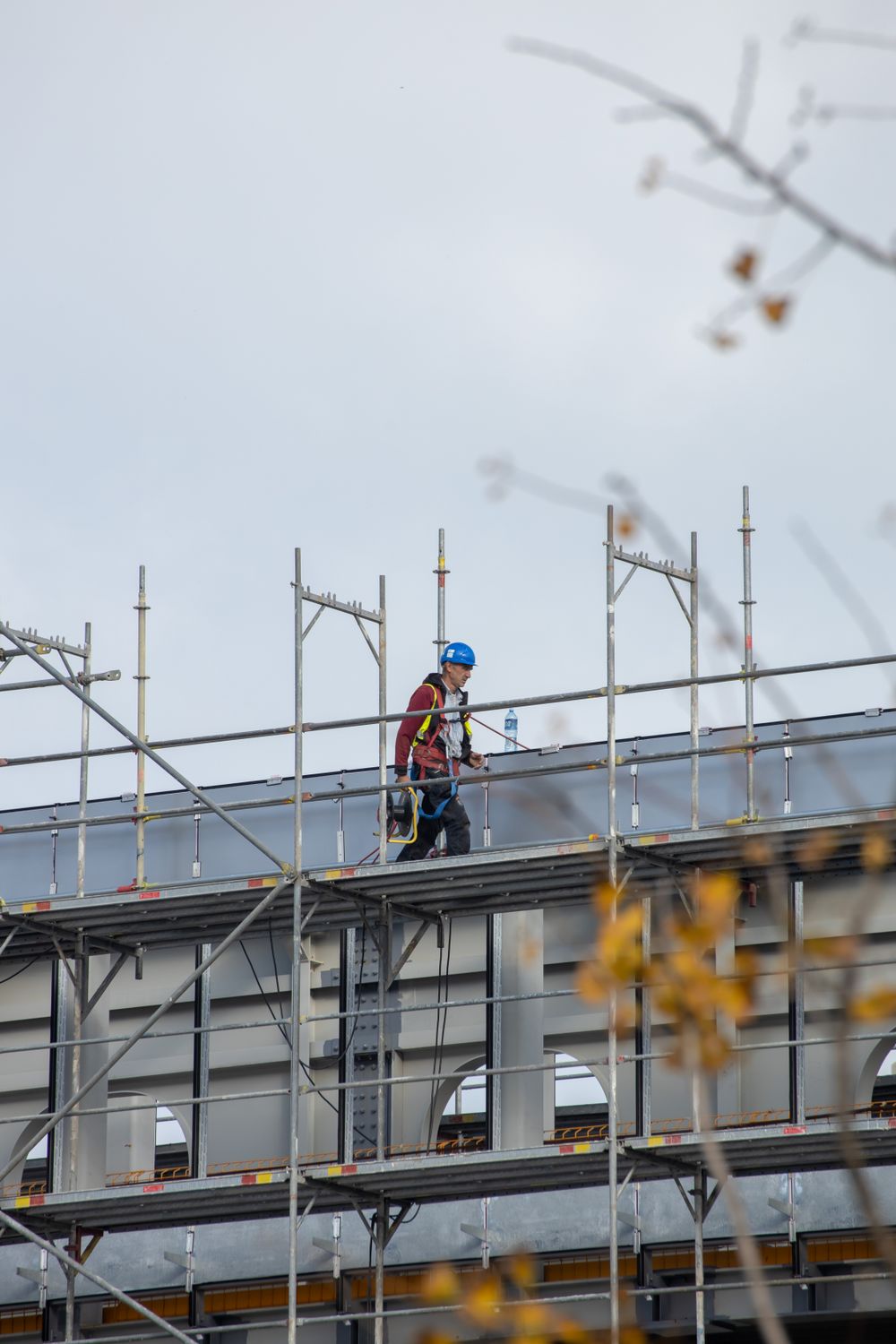
The Work at Height Regulations 2005, Explained Simply
Falls from height remain one of the most serious risks in British workplaces. The Work at Height Regulations 2005 set out exactly what employers and workers must do to manage them — and once you strip away the legal language, the duties are surprisingly straightforward.
If you have ever stood at the bottom of a ladder, climbed onto a flat roof or worked from a tower scaffold, the law that governs what you were doing is the Work at Height Regulations 2005 (often shortened to WAHR). These regulations sit underneath the Health and Safety at Work etc. Act 1974 and translate its broad duty to protect people into specific, practical rules about working off the ground. This guide explains the regulations in plain English, without the legal jargon.
What counts as work at height?
One of the most common misunderstandings is that the regulations only apply above a certain height — two metres is the figure people often quote. That is not correct. There is no minimum height in the regulations. Work at height means working in any place where, if precautions were not taken, a person could fall a distance liable to cause personal injury. That includes working below ground level too, such as next to an excavation or open inspection pit.
In practice that means changing a light fitting from a stepladder, loading a vehicle bed, working near a fragile rooflight or accessing a gantry all fall within scope. If a fall is possible and could hurt someone, the regulations apply.
The avoid, prevent, minimise hierarchy
The heart of the regulations is a simple order of priorities. You must work through it in sequence rather than jumping to the easiest option.
- Avoid working at height altogether wherever it is reasonably practicable. Can the job be done from the ground? Extending tools, assembling at ground level and lifting into place, or using long-reach equipment can remove the need to climb at all.
- Prevent a fall where work at height cannot be avoided. This usually means choosing an existing safe place of work or work equipment that stops anyone from falling — guardrails, a tower with edge protection, or a properly fitted mobile platform.
- Minimise the distance and consequences of a fall where the risk cannot be fully prevented. This is where nets, soft-landing systems and personal fall-arrest equipment come in.
The regulations always favour collective protection that safeguards everyone over personal protection that protects only the individual wearing it. A guardrail does not depend on a worker clipping on correctly; a harness does.
This sits alongside the wider idea of a hierarchy of control, which we explore further in our guide to preventing falls from height.
Who carries the duties?
The regulations place duties on the people who control work at height — these are the duty holders. That includes employers, the self-employed, and anyone who controls the work of others, such as a building contractor or a facilities manager. If you decide how a job is done, when it happens and who does it, you are likely to be a duty holder.
Workers have duties too. They must use the equipment provided in line with their training and instructions, and report any safety hazard or defect they notice. Safety on site is a shared responsibility, not something that lives only in the site office.
Planning, organisation and competence
The regulations require that all work at height is properly planned, appropriately supervised and carried out safely. Planning includes choosing the right equipment, allowing for the weather, and — crucially — planning for emergencies and rescue before work starts, not after something goes wrong.
Competence is a recurring theme. Anyone who plans, organises or carries out work at height, or who supervises it, must be competent to do so. For straightforward tasks, that may mean clear instruction and training. For complex work, it may require formal qualifications and experience. People who are still training may work at height as long as they are properly supervised.
Working at Heights training from £23
Self-paced, HSE-aligned, certificate the same day — £23 per person.
Inspecting equipment
The regulations are strict about the condition of access equipment. Work equipment used for work at height must be inspected at suitable intervals and after any event that could affect its safety. Certain equipment, such as scaffolds and mobile towers, must be inspected before first use and then at regular intervals, with the results recorded.
What an inspection regime looks like
- A pre-use check by the user at the start of each shift or task.
- Formal recorded inspections by a competent person at the intervals the regulations require.
- Equipment taken out of service immediately if it is damaged or fails a check.
Choosing the right equipment in the first place makes inspection far easier — our overview of choosing safe access equipment walks through the main options and when each is appropriate.
Key takeaways
- The Work at Height Regulations 2005 sit under the Health and Safety at Work etc. Act 1974 and apply wherever a fall could cause injury — there is no minimum height.
- Always work through the avoid, prevent, minimise hierarchy in order, favouring collective protection over personal protection.
- Duty holders must plan, organise and supervise the work, and everyone involved must be competent for their role.
- Access equipment must be inspected at suitable intervals and taken out of use the moment it is found defective.
- Short, focused training — such as a £23 Working at Heights course — helps workers understand these duties before they leave the ground.
The Work at Height Regulations 2005 are not designed to stop work happening. They exist to make sure that when work has to happen off the ground, it is thought through, equipped properly and carried out by people who know what they are doing. Understanding the avoid-prevent-minimise hierarchy is the single most useful thing any worker can take from them.